The Art of Listening: Why Being a Student of Life Is Better Than Being an Expert

In a world that celebrates instant opinions, fast answers, and visible expertise, one quality is becoming increasingly rare: the willingness to keep learning. Many people want to be seen as experts. They want to be the one with the answer, the authority, the final word. But life does not always reward the loudest voice. More often, it rewards the most teachable mind. The person who listens, reflects, adapts, and learns continuously is the one who endures change and grows through it. That is why being a student of life is often better than being an expert.
Expertise has value, of course. Skills matter. Experience matters. Deep knowledge matters. But the danger begins when expertise hardens into pride. The moment a person feels they have nothing left to learn, growth starts to slow down. Curiosity becomes weak. Listening becomes selective. Correction feels like an insult. Over time, that person may still appear knowledgeable, but inwardly, they stop expanding. In contrast, the student of life remains open. They know that learning is not a phase of youth but a lifelong discipline.
The most successful people in any generation are usually not the ones who stopped at one achievement. They keep learning new frameworks, new tools, new languages, new disciplines, and new ways of thinking. They understand that life keeps moving, and only learners move well with it. This truth is deeply reflected in Tamil wisdom literature and in the Quran, both of which honor knowledge, humility, and attentive listening.
Listening Is the Beginning of Wisdom
Listening is often underestimated because it looks quiet. It does not draw attention like speaking does. It does not always impress a crowd. Yet listening is one of the deepest forms of intelligence. To truly listen, a person must suspend ego, slow down judgment, and give sincere attention to what another person, text, or experience is teaching. Listening is not merely hearing sound; it is receiving meaning.
This is why listening is central to growth. People who listen well learn faster. They make fewer foolish assumptions. They understand nuance. They notice patterns others miss. A person who listens deeply can learn from teachers, friends, critics, books, elders, children, failures, and even silence. They turn everyday life into a classroom.
Thiruvalluvar captures this spirit beautifully in Thirukkural 396:
தொட்டனைத் தூறும் மணற்கேணி மாந்தர்க்குக்
கற்றனைத் தூறும் அறிவு.
Its meaning is profound: just as water rises from a sandy spring according to how deeply it is dug, knowledge rises in a human being according to how deeply they learn. The image is simple and unforgettable. A shallow effort gives shallow results. A deep effort brings deeper wisdom. Learning is not magic; it responds to discipline.
This couplet speaks directly to modern life. Many people want instant mastery. They want quick expertise without patient learning. But wisdom does not come through surface-level contact. It comes through depth, repetition, humility, and the willingness to keep digging. The student of life accepts this. They do not chase appearance; they pursue depth.

The Wealth of Hearing
The greatness of listening appears again in Thirukkural 411:
செல்வத்துட் செல்வஞ் செவிச்செல்வம் அச்செல்வம்
செல்வத்து ளெல்லாந் தலை.
The meaning is that among all forms of wealth, the wealth gained by listening is the highest. This is a striking claim. We usually think of wealth as money, property, status, or power. But Thiruvalluvar points to a richer treasure: the ability to hear and understand truth.
Listening is wealth because it increases a person from within. Material wealth can be lost. Position can fade. Fame can disappear. But the wealth of attentive hearing becomes judgment, wisdom, discernment, empathy, and perspective. A person who knows how to listen can continue to grow in every season of life.
This has practical meaning in today’s world. In a career, listening makes a person more effective. In relationships, listening builds trust. In leadership, listening prevents arrogance. In faith, listening opens the heart to guidance. In learning, listening is the first gate to all further understanding. That is why those who value listening are usually the ones who continue to improve long after others have become rigid.

Sangam Wisdom on Education and Humility
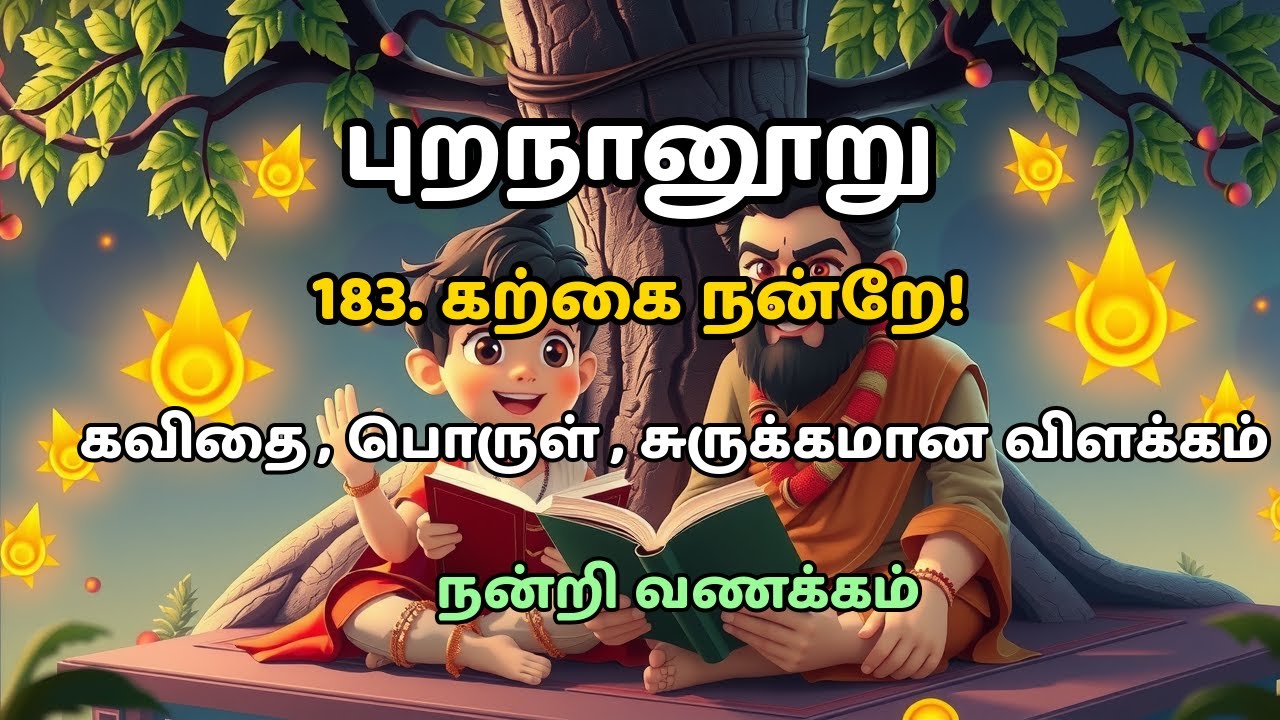
This same reverence for learning appears powerfully in Purananooru 183, a celebrated Sangam poem about the excellence of education. The poem says that one should support the teacher, give what is needed, and learn without resenting the discipline involved. It then makes a bold social point: even among children of the same womb, the learned one is especially esteemed; even among those of different ranks, the learned person draws honor and influence.
The poem is remarkable because it treats learning as something greater than birth or social position. It suggests that education can reshape a person’s place in society and that wisdom commands respect across boundaries. This is not only a celebration of learning; it is also a call to humility. True learning requires service, patience, and reverence for those who teach.
Here is the verse as shared:
உற்றுழி உதவியும், உறுபொருள் கொடுத்தும்,
பிற்றைநிலை முனியாது, கற்றல் நன்றே!
பிறப்பு ஓர் அன்ன உடன்வயிற்று உள்ளும்,
சிறப்பின் பாலால், தாயும் மனம் திரியும்;
ஒருகுடிப் பிறந்த பல்லோ ருள்ளும்,
மூத்தோன் வருக என்னாது, அவருள்
அறிவுடை யோன் ஆறு அரசும் செல்லும்;
வேற்றுமை தெரிந்த நாற்பால் உள்ளும்,
கீழ்ப்பால் ஒருவன் கற்பின்,
மேற்பால் ஒருவனும் அவன்கண் படுமே.
This poem is deeply relevant now. In an age obsessed with titles and self-promotion, Sangam literature reminds us that the true measure of a person is not noise but knowledge. Not ego but understanding. Not status but substance.
Why Being a Student of Life Is Better Than Being an Expert
An expert often stands at a point of achievement. A student of life stands in a posture of growth. That difference is everything.
The expert may know much, but may also begin to protect identity more than truth. When a person becomes attached to being “the one who knows,” they can become less willing to ask questions, revisit assumptions, or admit ignorance. The student of life has a different strength. They do not need to appear complete. They are willing to say, “I am still learning.”
That posture creates long-term resilience. The student can update their thinking. They can learn a new software framework, adopt a new method, study a new language, or understand a new generation without feeling threatened. They are not broken by change because they are already built around growth.
This matters in every field:
- A developer who keeps learning stays relevant.
- A writer who keeps reading becomes sharper.
- A teacher who keeps listening becomes wiser.
- A leader who keeps learning becomes safer for others.
- A believer who keeps seeking knowledge becomes more grounded.
The student mindset is not weakness. It is disciplined openness. It means your identity is not trapped in yesterday’s competence. It means you can grow without shame. It means you remain alive to truth wherever it appears.
The Quranic Call to Knowledge
The Quran does not train people to be intellectually lazy. It repeatedly honors knowledge, reflection, and truthful awareness. It invites human beings to observe, read, remember, and think. One of the most beautiful things about the Quran is that it connects knowledge with humility rather than pride.
1. Quran 20:114 — Ask for more knowledge
“My Lord, increase me in knowledge.”
This verse is extraordinary because it teaches a prayer for continuous learning. Even after receiving revelation, the command remains to ask for more knowledge. That means growth is not optional for the serious believer. A faithful life includes intellectual humility.
2. Quran 58:11 — Knowledge elevates
“Allah will raise those who have believed among you and those who were given knowledge, by degrees.”
This verse shows that knowledge is not merely useful; it is elevating. It raises a person in rank, maturity, and responsibility. But this elevation is not meant to produce arrogance. It should create gratitude and carefulness.
3. Quran 96:1–5 — Read
The first revelation begins with the command to read. That alone is enough to show how central learning is in Islam. Civilization begins with reading, reflection, and awareness. The first movement of revelation is not domination but understanding.
4. Quran 17:36 — Do not follow what you do not know
This verse warns against speaking or following matters without knowledge. It teaches intellectual restraint. A student of life values truth more than ego, so they do not rush to comment on everything. They learn before they declare.
5. Quran 39:9 — Are the knowing and unknowing equal?
This verse asks a powerful question: are those who know equal to those who do not know? The answer is clear. Knowledge changes the quality of a person’s life. It shapes worship, ethics, speech, and judgment.
Taken together, these verses give a complete philosophy of lifelong learning:
- ask for more knowledge,
- honor knowledge,
- read,
- do not speak without knowledge,
- and recognize the difference that knowledge makes.
Curiosity Is the Engine of Growth
Curiosity is more than interest. It is a discipline of openness. It is the refusal to let familiarity become stagnation. Curious people do not assume they have seen everything. They keep exploring. They ask better questions. They stay mentally alive.
This is why the most successful people never stop learning new frameworks, languages, or skills. They understand that the world changes faster than titles do. A person may call themselves an expert, but if they stop learning, the world quietly moves past them. Meanwhile, the student of life keeps adapting.
Consider how this works:
- Learning a new language expands thought and empathy.
- Learning a new framework expands professional relevance.
- Learning a new skill builds resilience in uncertain times.
- Learning from another culture expands perspective.
- Learning from failure increases maturity.
Curiosity creates compounding returns. One book changes a question. One question changes a habit. One habit changes a career. One new skill changes a future. The student of life benefits from this compounding because they never close the door to growth.
Listening Protects Us from Arrogance
Listening is also a protection. It protects us from becoming foolish in the name of confidence. It protects relationships from careless speech. It protects leadership from blindness. It protects religion from shallow certainty. Many problems in life grow not from lack of talent, but from lack of teachability.
A person who no longer listens becomes trapped inside their own previous understanding. They repeat old conclusions in a changing world. They hear only what agrees with them. They mistake familiarity for truth. Eventually, they become fragile, because pride cannot adapt.
But a listening person is flexible without being empty. They can stand firmly while still learning. They can hold conviction with humility. They can respect wisdom wherever it appears. This is one reason why listening is such a high form of strength.
Becoming a Student of Life in Practice
Being a student of life is not only a philosophical idea. It is a daily practice. It can be built intentionally through habits like these:
- Read beyond your comfort zone.
- Listen fully before replying.
- Take notes when someone wiser speaks.
- Revisit old assumptions.
- Learn one new tool each season.
- Study people, not just information.
- Ask better questions instead of trying to look impressive.
- Treat correction as a gift, not an attack.
- Remain grateful for teachers, mentors, books, and experiences.
- Pray for increase in knowledge and clarity.
These small habits build a remarkable kind of person: someone stable, wise, relevant, and humble. Not noisy, but deep. Not proud, but strong.
The Best People Keep Learning
The people who leave lasting impact are rarely those who stopped at one success. They evolve. They remain attentive. They can change their methods without losing their principles. They know that maturity is not knowing everything. Maturity is knowing how to keep learning.
That is why being a student of life is better than being an expert. The expert may impress for a season. The student continues to grow across seasons. The expert may guard an image. The student guards truth. The expert may stop at mastery. The student turns mastery into a beginning.
Tamil wisdom, Sangam poetry, and the Quran all point in the same direction: keep learning, keep listening, keep humbling yourself before truth. That path does not make a person smaller. It makes them greater.
Conclusion
The world needs knowledgeable people, but even more, it needs teachable people. It needs men and women who do not worship their own opinions. It needs leaders who listen, learners who persist, and seekers who are unashamed to grow. In every field of life, the person who remains a student will often outlast the one who only wants to be called an expert.
So listen more deeply. Read more honestly. Learn more widely. Ask better questions. Stay curious. Keep your heart open to correction and your mind open to wisdom. The deepest success does not belong to the one who says, “I already know.” It belongs to the one who keeps saying, “Teach me more.”
Watch References
Download the Quran App
Read and reflect on Quran verses anytime through Al Quran Multilingual:
Closing thought
The expert knows. The student grows. In the end, growth matters more than image, because life rewards those who keep listening, keep reading, and keep becoming wiser.

Jinosh Nadar
Founder of Al Quran Multilingual. Dedicated to making Islamic wisdom accessible.