The Hidden Truth of Tamil Nadu's Anti-Hindi Movement: Voices Silenced in History
The Hidden Truth of Tamil Nadu's Anti-Hindi Movement: Voices Silenced in History
Introduction: Pongal, Tamil Identity, and a Forgotten Struggle
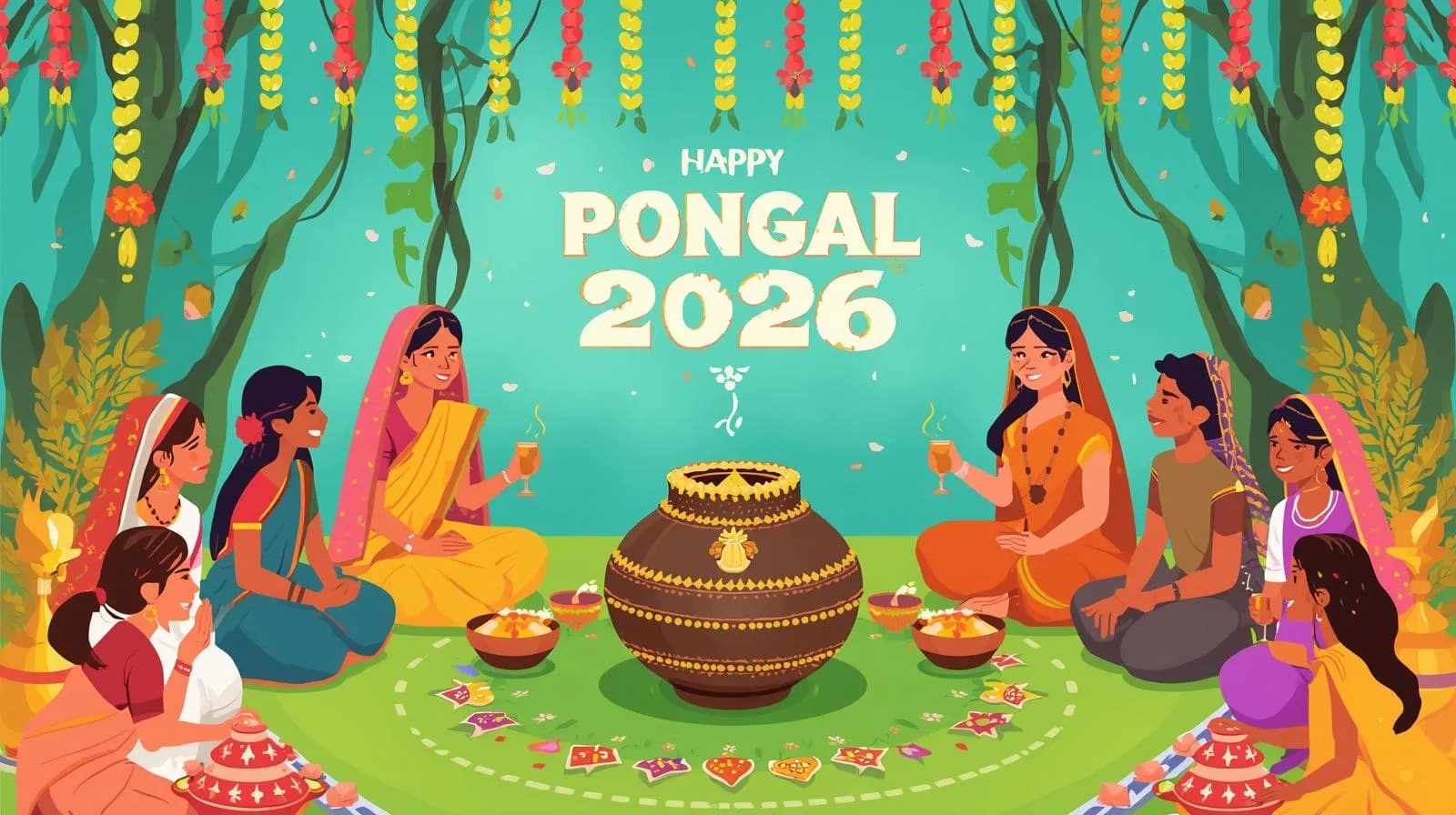
Pongal is not merely a harvest festival. For Tamils, it is a declaration of identity, gratitude, self-respect, and continuity. It celebrates land, language, culture, and community. Publishing this article on Thai Pongal is intentional—because the anti-Hindi movement itself was not just a protest against a language, but a civilizational resistance to cultural erasure.
The version of history taught today often compresses a long, painful, people-led struggle into a political success story. According to this narrative, political parties—and a few iconic leaders—stood at the forefront and "saved Tamil." But beneath this polished surface lies a more uncomfortable truth:
👉 The anti-Hindi movement was conceived, fought, and paid for by Tamil students, scholars, and ordinary people—long before politics arrived to claim ownership.
This blog seeks to reclaim that buried history.
What the Anti-Hindi Movement Was Really About
Not Anti-India, Not Anti-People—But Anti-Imposition
The anti-Hindi movement was never about hatred toward another people or region. It was a resistance against linguistic domination.
For Tamils, language is not just a tool for communication. Tamil is:
- A living classical language with over two millennia of literature
- A civilizational memory carried through poetry, ethics, and philosophy
- A means of social mobility, justice, and dignity
The fear was simple and justified:
- If Hindi became the sole or dominant official language,
- Non-Hindi speakers would be structurally disadvantaged in education, employment, and governance.
The protest was about equal citizenship, not separatism.
The Anti-Hindi Movement Did Not Begin in 1965
A Long Struggle Erased by Political Convenience
The anti-Hindi movement unfolded in multiple stages, each driven by Tamil civil society, not political machinery.
Stage 1: 1937–1940 – The First Resistance
When compulsory Hindi was introduced in schools, Tamil teachers, scholars, and parents were the first to object. This phase was marked by:
- Pamphlet campaigns
- Public meetings
- Student walkouts
- Cultural resistance through Tamil literature
This was not a party movement. It was a civilizational reflex.
Tamil scholars feared that once education shifted away from Tamil, the language would survive only as folklore—no longer as a language of power.
Learn more about this early resistance: https://en.wikipedia.org/wiki/Anti-Hindi_agitation_of_1937%E2%80%9340
Stage 2: 1948–1954 – Post-Independence Anxiety
Independence brought hope—but also fear.
Many Tamils realized that freedom from colonial rule might be followed by internal linguistic domination. Hindi was increasingly projected as a unifying national language, often ignoring India's plural reality.
During this period:
- Tamil intellectual circles debated linguistic justice
- Student groups formed discussion forums
- Cultural journals warned about language hierarchy
Still, no political party led this resistance.
Stage 3: 1965 – The Student-Led Eruption
The Turning Point Written in Blood
1965 was not planned by politicians. It was ignited by students.
When Hindi was perceived as moving toward sole official status:
- School and college students took to the streets
- Hindi textbooks were rejected
- Protest marches erupted across towns and villages
What Students Demanded
- "Tamil Vaazhga" (Long Live Tamil!)
- "Hindi Ozhiga" (Down with Hindi!)
They did not shout slogans about power or elections. They shouted about language, dignity, and survival.
The Human Cost
- Police firing and arrests
- Deaths and self-immolations
- Over 70 people died in the 1965 agitation
- Students faced expulsion, imprisonment, surveillance
These sacrifices were made without party protection, without political assurance, and without media glorification.
Read the full historical record: https://en.wikipedia.org/wiki/Anti-Hindi_agitations_of_Tamil_Nadu
Stage 4: Aftermath – When Politics Entered
Only after the movement became unstoppable did political forces position themselves as its representatives.
Timeline Analysis:
- January 25, 1965: C.N. Annadurai and 30,000 DMK members were pre-emptively arrested by the Congress government to prevent them from leading protests
- January 26–February 1965: Students independently led massive protests across Tamil Nadu
- Post-February 1965: As the movement gained unstoppable momentum, DMK positioned itself as the political voice of the agitation
Conclusion:
The DMK did not initiate the 1965 movement but became its political beneficiary, riding the wave to electoral victory in 1967.
Students and Tamil Scholars: The Real Architects
Who Actually Led the Streets?
- Teenagers without political connections
- University students with no party affiliations
- Tamil teachers willing to lose their jobs
- Poets and cultural activists
- Ordinary Tamil families
They faced:
- Expulsion from schools
- Imprisonment
- Surveillance
- Death
They did not gain:
- Statues
- Textbook chapters
- Political power
History remembers victors, not always martyrs.
Why Grassroots Heroes Were Erased
Political history prefers:
- Clear leaders
- Centralized control
- Narratives that can be institutionalized
Grassroots movements are messy, decentralized, and inconvenient.
As a result:
- Students became "crowds"
- Scholars became footnotes
- Political leaders became "saviors"
A Critical Re-Examination of Periyar (E.V. Ramasamy)
This section is not character assassination. It is historical scrutiny.
Ideological Distance from Tamil Nationalism
Periyar's primary framework was Dravidian identity, not Tamil nationalism. His ideological positions included:
- Opposition to "Tamil Nadu for Tamils"
- Advocacy of a broader "Dravida Nadu"
- Rejection of Tamil-centric linguistic nationalism
For many Tamil scholars, this represented a dilution of Tamil identity, not its defense.
Wikipedia Reference: https://en.wikipedia.org/wiki/Periyar
The Slogan Shift: From Tamil to Dravidian
Confirmed Historical Fact:
Periyar did shift the slogan from "Tamil Nadu for Tamils" to "Dravida Nadu for Dravidians". This is well-documented:
- The Dravidar Kazhagam (DK) under Periyar's leadership demanded a separate Dravida Nadu (land for all Dravidian language speakers—Tamil, Telugu, Kannada, Malayalam)
- This was a broader, pan-South Indian identity rather than a Tamil-centric one
- In 1968, Periyar wrote an editorial titled "Tamil Nadu for Tamilians" but the movement had long been framed as Dravidian
Impact of This Shift:
Critics argue this diluted the Tamil-centric focus and made the movement about anti-North Indian sentiment rather than pro-Tamil empowerment. The Dravidian framing allowed Telugu, Kannada, and Malayalam speakers to be included, but it also meant Tamil identity was subsumed under a larger category.
Controversial Positions and Actions
Critics point to:
- Derogatory remarks attributed to Tamil language and literature
- Open criticism of classical Tamil texts
- Harsh responses toward spontaneous student protests
These positions alienated large sections of Tamil civil society.
C.N. Annadurai and the Language Policy: English Over Tamil?
Anna's Primary Goal: Keeping English, Not Promoting Tamil
A critical claim asserts that C.N. Annadurai's primary objective was not to make Tamil the sole official language, but rather to ensure that English remained a co-official language to counter Hindi.
The Two-Language Policy (1968):
When Annadurai became Chief Minister in 1967, he introduced a two-language policy in January 1968:
- Tamil + English (rejecting the three-language formula of Tamil + Hindi + English)
- Hindi was eliminated from Tamil Nadu schools
Wikipedia Confirmation:
This is accurate. The DMK government rejected the three-language formula and adopted a two-language policy.
Read more: https://en.wikipedia.org/wiki/C._N._Annadurai
English as Primary, Tamil as Secondary?
The Controversial Claim:
The 1968 policy effectively made English the primary official language for administration, higher education, and inter-state communication, while Tamil was placed alongside other regional languages (Telugu, Kannada, Urdu) in a secondary category for cultural and local use.
Anna's Priorities:
- "Long Live English" to maintain links with the center and the global economy
- English as a counter to Hindi, not as an enemy in itself
- Tamil as cultural identity but not necessarily the language of power and governance
Critical Perspective:
While the DMK is credited with "saving Tamil," critics argue that Anna preserved English dominance rather than elevating Tamil to replace both Hindi and English. This benefited:
- English-educated elites (including DMK leaders themselves)
- Urban middle classes with access to English education
- Corporate and administrative sectors that operated in English
Tamil-only advocates (pure Tamil scholars and cultural activists) wanted Tamil to be the sole official language, which never materialized.
The Students' Struggle vs. Political Narrative
Students Shouted "Long Live Tamil," Politicians Shouted "Long Live English"
A particularly striking claim differentiates between the slogans of the student-led protests and those of the DMK leadership:
On the streets (1965):
- Students: "Tamil Vaazhga!" (Long Live Tamil!)
- Students: "Hindi Ozhiga!" (Down with Hindi!)
In political circles:
- DMK leadership: "English Nilaiththu Niruththappadalvendum!" (English must be retained!)
- Focus on English as the alternative, not Tamil empowerment
DMK Stepped In to Capitalize on Student Momentum
The DMK did not initiate the 1965 movement but became its political beneficiary, riding the wave to electoral victory in 1967.
Language as the Soul of a People
A regional language is not merely a tool for communication—it is:
- The repository of a people's history, literature, and wisdom
- A marker of identity and self-respect
- A means of access to education, governance, and justice
For Tamil speakers:
- Tamil is 2,000+ years old, one of the world's oldest living languages
- It has produced Sangam literature, Thirukkural, Silappatikaram, and countless other treasures
- Imposing Hindi on Tamil speakers meant:
- Cultural subordination to North India
- Marginalization in education and employment
- Erasure of Tamil identity
The Bonding of Language and People
Language shapes:
- How we think (cognitive patterns)
- How we relate to our ancestors and heritage
- How we belong to a community
When a language is suppressed, a people's collective memory and identity are eroded. When a language is imposed, it creates resentment, division, and cultural violence.
Role of Media and False Narratives
The Polished Political Narrative
The claim suggests that the history taught today is a polished political narrative constructed by the DMK after it came to power in 1967. This narrative emphasizes:
- DMK as the savior of Tamil
- Annadurai and Karunanidhi as heroes
- Students and scholars as background actors
False Claims About EVR and Annadurai
Common myths spread through media and cinema:
- Periyar was always the champion of Tamil (ignoring his "Dravidian" framing)
- Annadurai led the 1965 protests (he was in jail during the peak)
- DMK initiated the anti-Hindi movement (students and scholars were first)
What historical records actually show:
- Tamil scholars like Somasundara Bharathiar were instrumental
- Students bore the brunt of police violence and martyrdom
- Congress-affiliated leaders played significant roles in early agitations
The Media's Role in Myth-Making
After 1967, DMK-aligned media and Dravidian cinema constructed a narrative that:
- Glorified party leaders
- Minimized or erased non-DMK contributions
- Positioned the Dravidian movement as the sole legitimate heir of Tamil identity
Parasakthi Movie and Its Relation to the Anti-Hindi Agitation
The Film as Political Propaganda
Parasakthi (1952), written by M. Karunanidhi and starring Sivaji Ganesan, is often cited as a cultural milestone in the Dravidian movement.
The Claim:
The movie depicts itself as being about the anti-Hindi incident but was actually an attempt to steal the credit for the Hindi protest movement. It positioned the DMK and Dravidian ideology as the leaders of the struggle, even though:
- The film was released in 1952, during the early phases of anti-Hindi sentiment
- The major 1965 agitation hadn't happened yet
- The actual protesters were students and scholars, not just political parties
Wikipedia Confirmation:
Parasakthi is described as a social drama dealing with post-independence disillusionment, corruption, and social issues, with strong Dravidian ideological messaging. It was indeed a political propaganda tool for the DMK.
Read more: https://en.wikipedia.org/wiki/Parasakthi_(1952_film)
Are Telugu People Supporting the Anti-Hindi Movement?
No Telugu Support for the Anti-Hindi Agitation
Claim:
None of the Telugu people supported the anti-Hindi movement. In fact, Andhra Pradesh accepted the three-language formula (Telugu + Hindi + English) without major resistance.
Wikipedia Confirmation:
This is accurate. The anti-Hindi agitation was specific to Tamil Nadu. Other South Indian states, including Andhra Pradesh, Karnataka, and Kerala, did not mount similar large-scale protests.
Why?
- Linguistic politics differed across South India
- Telugu speakers were more focused on statehood issues (formation of Andhra Pradesh in 1953/1956)
- Tamil Nadu had a unique combination of:
- Ancient Tamil literary heritage
- Dravidian political mobilization
- Anti-Brahmin social movements
Quranic Perspective: Against Imposition of One Culture or Language
Islam Celebrates Linguistic Diversity
Surah Ar-Rum (30:22):
"And of His signs is the creation of the heavens and the earth and the diversity of your languages and your colors. Indeed in that are signs for those of knowledge."
Read at: https://alquranjino.online/book/ara_quransimple/30/22
Meaning:
- Linguistic diversity is a divine sign, not a problem to be solved
- Allah created different languages intentionally—each has beauty and value
- Imposing one language on all people contradicts this divine design
All Peoples and Tribes Are Equal
Surah Al-Hujurat (49:13):
"O mankind, indeed We have created you from male and female and made you peoples and tribes that you may know one another. Indeed, the most noble of you in the sight of Allah is the most righteous of you."
Read at: https://alquranjino.online/book/ara_quransimple/49/13
Key Principles:
- No language or ethnicity is superior to another
- Diversity is for mutual understanding, not hierarchy
- Hindi is not superior to Tamil, nor is English superior to Urdu, nor Arabic superior to Malayalam
Islamic Rejection of Linguistic Imperialism
Surah Ibrahim (14:4):
"And We did not send any messenger except [speaking] in the language of his people to state clearly for them."
Read at: https://alquranjino.online/book/ara_quransimple/14/4
Principle:
- Allah sent messengers in their people's own languages for clarity and justice
- Language accessibility is a principle of divine justice
- Forcing Hindi on Tamils violates this—just as forcing Tamil on Telugus would
Islamic Ruling:
Imposing one language at the expense of others is a form of cultural oppression (zulm), which Islam condemns.
Does the Quran Have to Be Read Only in Arabic?
The Answer: No—Understanding is the Goal
Islamic Scholarly Consensus:
1. For Ritual Prayer (Salah):
- Yes, Arabic is required for the obligatory recitations in prayer
2. For Study and Understanding:
- No, translations are permissible and encouraged
- The goal is to understand and follow the Quran's message, not just recite sounds
Why Arabic is Preserved
The Quran was revealed in Arabic for specific reasons:
- To preserve the exact wording without translation errors or adulterations
- Arabic Quran = literal word of Allah
- Translations = human interpretations of meaning
However:
A Tamil Muslim who reads the Quran in Tamil translation and follows its teachings is fulfilling the purpose better than someone who recites Arabic without understanding.
The Quran is for All Humanity, Not Just Arabs
Surah Ibrahim (14:52):
"This is a message for the people that they may be warned thereby and that they may know that He is but one God and that those of understanding will be reminded."
Read at: https://alquranjino.online/book/ara_quransimple/14/52
Meaning:
- The Quran is a universal message for all humanity
- It is not exclusive to Arabic speakers
- Every nation has the right to access the Quran in their own language
Al-Quran Multilingual Pro: The Best Solution
For those who want to:
- Read the Quran in Tamil while preserving the Arabic original
- Understand word-by-word meanings
- Listen to proper Arabic recitation and learn pronunciation
📱 Al-Quran Multilingual App is the ideal solution:
Mobile Downloads:
- Android: https://play.google.com/store/apps/details?id=jino.quran.app
- iOS/macOS: https://apps.apple.com/in/app/al-quran-multilingual/id6738510896
Desktop & Web Access:
- Desktop (Windows/Mac/Linux): https://github.com/jinosh05/Al-Quran-Multilingual-Desktop/releases
- Web Browser: https://alquranjino.online
Features:
- Arabic + Tamil side-by-side display for easy comparison
- Multiple Tamil translations (Jan Turst Foundation, Abdulhameed Baqavi)
- Word-by-word Tamil meanings for deep understanding
- Audio recitation with proper Tajweed pronunciation
- Offline reading capability—no internet needed
- Bookmarks and search functions for easy navigation
- Completely free to download and use
How It Preserves Both Heritage and Understanding
The app beautifully solves the tension between linguistic preservation and religious understanding:
✅ Arabic is preserved in its original, pure form—the literal word of Allah
✅ Tamil is elevated as a language of spiritual understanding—not marginalized
✅ Both languages respected equally—neither imposed on the other
This is linguistic justice in action—something Tamils fought for through the anti-Hindi movement.
Join the Community
Connect with others discussing Tamil history, linguistic justice, and Islamic perspectives:
Telegram Community: https://t.me/+do4xJsQLTbNhZTc1
Discuss:
- Tamil history and linguistic rights
- Anti-Hindi agitation: untold stories
- Islamic perspectives on cultural diversity and justice
- Al-Quran study in Tamil
- Language, identity, and dignity
FAQ
Q1: Did DMK really lead the anti-Hindi agitation?
A: According to alternative historical accounts and testimonies:
- Students and Tamil scholars initiated and led the protests on the ground
- DMK leaders like Annadurai were in jail during the peak of 1965 protests
- DMK capitalized politically after the fact and constructed a narrative positioning itself as the leader
Q2: Did Periyar oppose the anti-Hindi protesters initially?
A: Some testimonies claim Periyar initially called protesters "goons," though this is not confirmed in Wikipedia. What is confirmed:
- Periyar shifted focus from "Tamil Nadu for Tamils" to "Dravida Nadu for Dravidians"
- His priority was anti-Brahminism and Dravidian identity, not pure Tamil linguistic nationalism
Learn more: https://en.wikipedia.org/wiki/Periyar
Q3: Did Annadurai prioritize English over Tamil?
A: Yes, strategically:
- He rejected Hindi but kept English as co-official language
- The two-language policy (1968) made English the language of power and administration
- Tamil was protected culturally but not elevated to sole official status
Q4: Is it true that no Telugu people supported the anti-Hindi movement?
A: Correct. The anti-Hindi agitation was specific to Tamil Nadu. Andhra Pradesh accepted the three-language formula without major resistance.
Q5: Does Islam allow imposing one language on another people?
A: No. Islam celebrates linguistic diversity (Quran 30:22) and requires that people be addressed in their own languages for clarity and justice (Quran 14:4). Linguistic imposition is a form of oppression.
Read the evidence: https://alquranjino.online
Q6: Can I read the Quran in Tamil instead of Arabic?
A: Yes, for study and understanding. Arabic is required only for ritual prayer. Translations are encouraged for comprehension.
Download now: https://play.google.com/store/apps/details?id=jino.quran.app (Android) or https://apps.apple.com/in/app/al-quran-multilingual/id6738510896 (iOS)
Conclusion: Reclaiming the Buried History
The history of the anti-Hindi agitation is more complex than the official narrative suggests. While the DMK became the political face and beneficiary of the movement, the true pioneers were students, Tamil scholars, and grassroots activists who bled and died for Tamil dignity.
Key Takeaways:
- Students and scholars led, politicians followed
- Periyar's role was complex, not uniformly pro-Tamil
- Annadurai protected English, not just Tamil
- Media narratives often erase grassroots heroes
- Islam teaches linguistic equality—no language should be imposed on another
- Reading the Quran in Tamil honors both faith and mother tongue
The Unfinished Journey
The anti-Hindi movement succeeded in preventing Hindi imposition, but it did not achieve what many grassroots activists envisioned: Tamil as the sole language of power and governance. Instead, English was preserved as the language of administration and elite education.
Just as Tamils fought for the right to study in their own language, Muslims today can honor that legacy by reading the Quran in their mother tongue—understanding the message while preserving the original.
Download Al-Quran Multilingual Today
This Pongal season, celebrate Tamil identity and linguistic rights by experiencing the Quran in Tamil. Download the app and join thousands who are reading the Quran in their own language.
📥 Download Links:
Android Phone: https://play.google.com/store/apps/details?id=jino.quran.app
iPhone/iPad: https://apps.apple.com/in/app/al-quran-multilingual/id6738510896
Computer (Windows/Mac/Linux): https://github.com/jinosh05/Al-Quran-Multilingual-Desktop/releases
Web Browser (No Download Needed): https://alquranjino.online
Remember the Forgotten Heroes
Remember the unnamed students who gave their lives without party protection.
Remember the silenced scholars whose contributions disappeared from textbooks.
Remember that language survives only when people defend it—not when politicians claim it.
Remember that understanding the Quran in your own language honors both your faith and your heritage.
Protect Tamil. Question narratives. Preserve truth. Read the Quran in Tamil.
Pongal Greetings! 🌾 Happy Thai Pongal!
This article was published on Thai Pongal 2025 to honor Tamil identity, linguistic justice, and the forgotten heroes of the anti-Hindi movement.

Jinosh Nadar
Founder of Al Quran Multilingual. Dedicated to making Islamic wisdom accessible.