Keezhvenmani Massacre 1968: Remembering 44 Martyrs and the Fight for Dignity
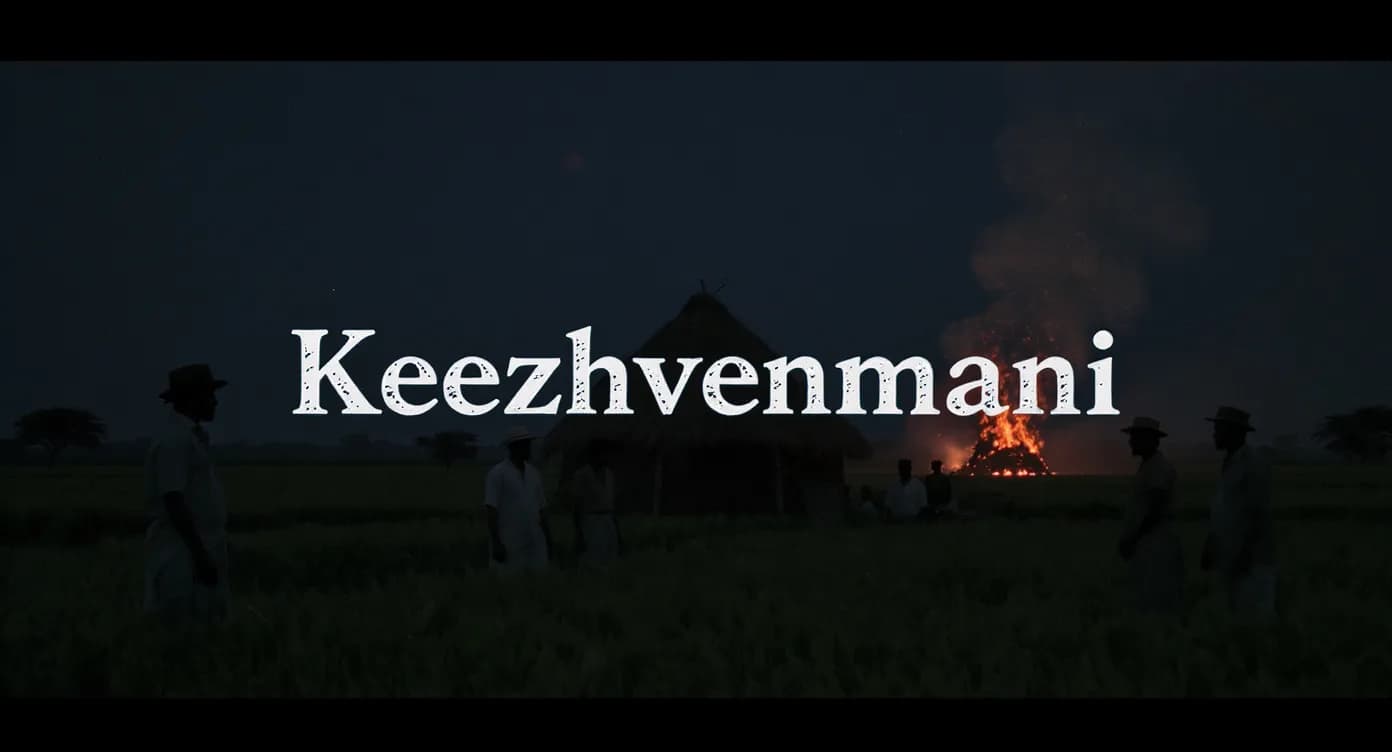
Keezhvenmani Massacre 1968: Remembering 44 Martyrs and the Fight for Dignity
December 25, 1968 – While much of the world celebrates Christmas, for Tamil Nadu—particularly for Dalit communities and those who stand against caste oppression—this date marks one of the darkest chapters in independent India's history: the Keezhvenmani Massacre (also spelled Kilvenmani).
On this night, 44 Dalit agricultural laborers—16 women, 23 children, and 5 elderly men—were locked inside a small hut and burnt alive by landlords and their armed henchmen in the village of Keezhvenmani (then in Thanjavur district, now Nagapattinam district) in Tamil Nadu.
Their crime? Demanding fair wages for their labor.
Today, 57 years later, we remember their sacrifice, reflect on the systemic injustice that enabled this atrocity, examine the political and moral failures that followed, and explore what Islam and universal ethics teach about labor rights, caste, revenge, and human dignity.
1. The Context: A Struggle for Half a Measure of Rice
The Keezhvenmani Massacre was not a spontaneous explosion of violence—it was the culmination of a class and caste struggle that had been building for years.
1.1 The Agrarian System: Feudalism and Exploitation
In the 1960s, Tamil Nadu's agricultural economy was dominated by:
- Large landlords (mostly from upper castes like Vellalar, Gounder, and Naicker communities)
- Landless Dalit laborers (from communities like Pallar, Paraiyar) who worked as bonded or daily-wage workers
The system was characterized by:
- Extremely low wages (often paid in kind—rice, not cash)
- No workers' rights or legal protections
- Caste-based discrimination and violence to maintain control
- Debt bondage keeping families enslaved for generations
1.2 The Demand: Just Half a Measure More
In the late 1960s, inspired by the Communist Party of India (Marxist), Dalit agricultural workers in Thanjavur district began organizing:
- They formed labor unions (kooligal sangam)
- Their demand was simple: increase daily wages by half a measure (padi) of paddy
- They also demanded:
- 8-hour workday (instead of sunrise to sunset)
- Abolition of bonded labor
- Dignity and respect in treatment
This modest demand was seen by landlords as an existential threat to their feudal power.
1.3 The Landlords' Response: Formation of the Paddy Producers Association
In response to the workers' organizing, landlords formed the Paddy Producers Association led by Gopalakrishna Naidu, a wealthy landlord from the Naicker caste.
Their strategy:
- Economic boycott: Refusing to hire unionized workers
- Political pressure: Lobbying the DMK government to suppress the movement
- Violence and intimidation: Hiring goondas (thugs) to attack union leaders
- Demand: Workers must abandon the "Red Flag" (Communist union) and join the landlords' association
The workers refused.
1.4 The Night of December 25, 1968
Tensions escalated throughout 1968. On December 25, after a series of clashes:
The Attack:
- Around 200 armed men (landlords' henchmen, upper-caste villagers) surrounded the Dalit colony (segregated area called "cheri")
- They opened fire with rifles and country bombs
- Terrified villagers (mostly women, children, elderly—men were away for work or hiding) took refuge in a small 8ft × 9ft hut belonging to a man named Ramaiah
- The attackers set the hut on fire using kerosene and straw
- They blocked the exits and beat back anyone trying to escape
- 44 people burned to death
The next morning, police arrived to find charred bodies huddled together—mothers shielding children, grandparents clutching grandchildren.
2. Gopalakrishna Naidu and Caste Solidarity
2.1 The Role of Gopalakrishna Naidu
Gopalakrishna Naidu was the primary architect of the massacre:
- He was a wealthy landlord who owned vast tracts of land
- He led the Paddy Producers Association
- Witnesses testified that he personally organized and financed the attack
- He viewed the workers' union as a threat to the caste hierarchy as much as an economic threat
2.2 Caste Solidarity: Not Just One Man
This was not the act of one evil individual—it was enabled by:
- Caste solidarity: Other upper-caste landlords and villagers supported the violence
- Community participation: Approximately 200 people participated in the attack
- Social sanction: The act was seen by many in the upper-caste community as "teaching Dalits their place"
- Systemic protection: Police, judiciary, and political structures protected the perpetrators
Key Point:
Caste oppression is not just individual prejudice—it is a structural system where entire communities benefit from and defend their privilege through violence when challenged.
3. The 44 Martyrs: Names and Faces Behind the Number
The victims included:
- 16 women (many mothers, sisters, wives)
- 23 children (some infants, some toddlers)
- 5 elderly men
They were real people with names, dreams, and families:
- Kannayee (age 50) – elder woman
- Velli (age 6) – child
- Pichaiammal (age 40) – mother
- And 41 others whose names are inscribed at the Venmani Memorial
Today, they are collectively honored as the "Venmani Martyrs" (வெண்மணி தியாகிகள்).
4. Politicians and Political Response
4.1 C.N. Annadurai (Chief Minister, DMK)
C.N. Annadurai was Chief Minister when the massacre occurred:
- His government's response was slow and inadequate
- The massacre was initially treated as a "law and order problem" rather than a caste/class atrocity
- Critics argue the DMK government, despite its rhetoric of social justice, protected upper-caste interests when push came to shove
4.2 M. Karunanidhi (DMK Leader, Later CM)
M. Karunanidhi was a powerful minister at the time:
- He visited the site after public pressure
- His government appointed the Ganapathi Pillai Commission to investigate agricultural wages
- This eventually led to some labor reforms, including minimum wage laws
- However, justice for the victims remained elusive
4.3 Communist Leaders: The Organizers
CPI(M) leaders played a crucial role:
- B. Srinivasa Rao, P. Ramamurti, Manali Kandasami: Organized the laborers before the massacre
- After the massacre, they led the protest movement for justice
- They built the Venmani Memorial to ensure the martyrs were never forgotten
Jyoti Basu (Communist leader from West Bengal) laid the foundation stone for the memorial in 1969.
5. The Legal Aftermath: A Travesty of Justice
5.1 District Court Conviction (1969)
Initially, there was hope:
- The district court convicted several landlords and henchmen
- Death sentences and life imprisonments were handed down
5.2 Madras High Court Acquittal (1973)
The hope was crushed:
- The Madras High Court acquitted all the accused
- The judges' reasoning was shockingly classist and casteist:
- "Respectable landlords who own cars and vast properties would not walk to a village and set fire to a hut themselves"
- The court doubted that "educated men" could commit such a crime
- This reasoning ignored eyewitness testimony and physical evidence
The Message:
In India's justice system, class and caste privilege could trump truth.
5.3 Retributive Justice: Assassination of Gopalakrishna Naidu (1980)
Since the law failed, people took matters into their own hands:
- In 1980, Gopalakrishna Naidu was assassinated in a revenge attack
- The killers were allegedly linked to Left-wing militant groups and Dalit activists
- While some saw this as poetic justice, it also raised moral questions about revenge
6. E.V. Ramasamy (Periyar) and His Controversial Response
6.1 Periyar's Stance on Keezhvenmani
E.V. Ramasamy (Periyar), the iconic Dravidian leader known for his anti-caste activism, had a controversial reaction to the massacre:
His Main Criticisms:
-
Blamed Communist "Foreign Ideology":
- He argued that Communist leaders had "misled" illiterate laborers into a violent confrontation
- He called Communism a "foreign ideology" that didn't understand Tamil Nadu's caste dynamics
-
Questioned the Strategy:
- He felt the demand (half-measure of rice) was too small to justify such confrontation
- He criticized the "Red Flag" movement for escalating tensions
6.2 The Deeper Problem: Periyar and His Caste (Naicker)
Uncomfortable Truths About Periyar:
- Periyar himself belonged to the Naicker (Naidu) caste—the same caste as Gopalakrishna Naidu
- Many Naickers were landlords and beneficiaries of the agrarian system
- Dalit activists have pointed out:
- Periyar's anti-Brahminism was genuine, but his anti-caste work often stopped short of challenging his own caste's dominance
- He was notably silent or defensive when atrocities were committed by non-Brahmin upper castes (like Naickers, Gounders, Vellalars)
6.3 Periyar's Personal Controversies
Additional Context on Periyar:
- Domestic violence: There are credible accounts that he physically abused his first wife, Nagammai
- Second marriage scandal: At age 70, he married his adopted daughter Maniammai (then 32), causing controversy
- Credit-taking: He often claimed sole credit for movements (like the Vaikom Satyagraha) where his wife and others played major roles
Conclusion:
Periyar was a complex figure—a pioneer in many ways, but also not beyond critique, especially regarding his blind spots on non-Brahmin caste oppression and personal ethics.
7. Is Revenge Good? The Islamic Perspective on Justice
7.1 The Revenge Killing of Gopalakrishna Naidu
Many felt satisfaction when Naidu was killed in 1980. But from an ethical and Islamic perspective, several questions arise:
Did revenge serve justice?
- It gave emotional closure to some victims' families
- But it also:
- Perpetuated a cycle of violence
- Denied the possibility of legal reform
- Became a vigilante precedent
7.2 What the Quran Says About Justice and Revenge
Surah Al-Ma'idah (5:8):
"O you who have believed, be persistently standing firm for Allah, witnesses in justice, and do not let the hatred of a people prevent you from being just. Be just; that is nearer to righteousness."
Read at: https://alquranjino.online/book/ara_quransimple/5/8
Key Principle:
- Justice must be impartial—even toward those you hate
- Personal vendetta ≠ justice
Surah Ash-Shura (42:40):
"The recompense for an evil is an evil like it, but whoever pardons and makes reconciliation—his reward is with Allah."
Read at: https://alquranjino.online/book/ara_quransimple/42/40
Balance:
- Victims have the right to proportional recompense (qisas)
- But forgiveness and reconciliation are higher virtues
Surah An-Nahl (16:126):
"And if you punish [an enemy], punish with an equivalent of that with which you were harmed. But if you are patient—it is better for those who are patient."
Read at: https://alquranjino.online/book/ara_quransimple/16/126
Takeaway for Keezhvenmani:
- The legal system should have delivered justice
- Vigilante revenge, while emotionally understandable, is not the ideal path
- True victory lies in structural change (ending caste/class oppression), not just killing oppressors
8. Islam's View on Caste: Radical Equality
8.1 Islam Rejects All Forms of Caste Hierarchy
The Quran is unambiguous about human equality:
Surah Al-Hujurat (49:13):
"O mankind, indeed We have created you from male and female and made you peoples and tribes that you may know one another. Indeed, the most noble of you in the sight of Allah is the most righteous of you."
Read at: https://alquranjino.online/book/ara_quransimple/49/13
Core Principles:
- All humans share one origin (Adam and Eve)
- Tribes/castes exist for identification, not hierarchy
- Only piety (taqwa) determines worth before Allah—not birth, wealth, or color
8.2 The Last Sermon: Explicit Rejection of Racial/Caste Superiority
Prophet Muhammad ﷺ stated in his final sermon:
- "All mankind is from Adam and Eve. An Arab has no superiority over a non-Arab, nor does a non-Arab have superiority over an Arab; a white has no superiority over a black, nor does a black have superiority over a white—except by piety and good action."
This directly contradicts caste ideology, which claims Brahmins are superior by birth and Dalits are inferior by birth.
8.3 Bilal ibn Rabah: From Enslaved to Muezzin
Bilal was:
- An enslaved African in Mecca
- Tortured for accepting Islam
- After liberation, the Prophet ﷺ appointed him as the first muezzin (caller to prayer)
- He climbed the Kaaba to give the call—a black man standing atop the most sacred place, honored for his faith
Lesson:
Islam elevates the oppressed and dismantles systems where birth determines status.
9. What Should People Learn From This Incident?
9.1 Caste/Class Oppression is Structural, Not Individual
- The massacre wasn't just Naidu's personal evil—it was systemic
- Entire communities, police, courts, and political structures enabled it
- Solution: Dismantle caste privilege through:
- Land reforms
- Strong labor laws
- Affirmative action
- Education and awareness
9.2 Silence is Complicity
- Many "social justice" leaders (including Periyar) were silent or defensive when their own castes were perpetrators
- Lesson: True anti-caste work means challenging your own community's privileges
9.3 Workers' Rights Are Human Rights
- The demand for fair wages and dignity is not radical—it's basic justice
- Islam, communism, and modern human rights all agree: exploitation of labor is oppression
9.4 Legal Justice Matters—But Often Fails
- The High Court acquittal shows justice systems are not neutral—they reflect existing power structures
- Reforms needed:
- Judicial accountability
- Protection for witnesses
- Fast-track courts for atrocities
9.5 Memory and Memorialization Keep Struggles Alive
- The Venmani Memorial ensures the martyrs are not forgotten
- Every December 25, thousands gather there
- Lesson: Remember, educate, and continue the fight
10. Islamic Teachings on Unity of People at the Workplace
10.1 Workers as a Community
Surah Al-Hujurat (49:10):
"The believers are but brothers, so make peace between your brothers."
Read at: https://alquranjino.online/book/ara_quransimple/49/10
Application:
- Workers should see each other as brothers/sisters in humanity
- Unity against exploitation is encouraged
- Divisions (by caste, tribe, ethnicity) are tools of oppressors
10.2 Mutual Support and Collective Action
Surah Al-Ma'idah (5:2):
"And cooperate in righteousness and piety, but do not cooperate in sin and aggression."
Read at: https://alquranjino.online/book/ara_quransimple/5/2
Meaning:
- Collective action for justice (like labor organizing) is righteous cooperation
- Standing together against exploitation = fulfilling this command
11. Work Ethics and Fair Wages in Islam
11.1 The Right to Fair Compensation
Surah At-Tawbah (9:105):
"And say, 'Do [as you will], for Allah will see your deeds, and [so will] His Messenger and the believers.'"
Read at: https://alquranjino.online/book/ara_quransimple/9/105
Principle:
- Work has dignity before Allah
- Workers deserve just compensation—not charity, but rights
11.2 Prohibition of Exploitation
Surah An-Nisa (4:29):
"O you who have believed, do not consume one another's wealth unjustly but only [in lawful] business by mutual consent."
Read at: https://alquranjino.online/book/ara_quransimple/4/29
Application:
- Withholding wages or underpaying workers = unjustly consuming their wealth
- Employers who exploit labor are committing a grave sin
11.3 Timely Payment
The Prophet ﷺ said (referenced in Quranic ethics):
- "Give the laborer his wage before his sweat dries."
This is echoed in the Quranic call for fairness in contracts and honoring commitments (Quran 17:34, 5:1).
Read at: https://alquranjino.online/book/ara_quransimple/17/34
Surah Al-Isra (17:34):
"And fulfill [every] commitment. Indeed, the commitment is ever [that about which one will be] questioned."
Meaning:
- Wage contracts must be honored promptly
- Delaying or cheating workers is a broken promise before Allah
12. Purananuru on Labor, Dignity, and Injustice
The ancient Tamil text Purananuru contains powerful verses about work, dignity, and the ethics of rulers:
12.1 Purananuru 189 – Basics of Life
Purananuru 189 – Food and Clothing
Your referenced video on Purananuru 189  explains a poem where the poet speaks of the basics of life: eating and clothing as fundamental human needs, while still emphasizing dignity and simplicity.
This poem speaks about food and clothing as fundamental rights:
- The poet reflects on how simple needs—eating and dressing—should be accessible to all
- When the powerful hoard resources, the laborers starve
Relevance:
The Keezhvenmani workers weren't asking for luxury—just half a measure more rice. The poem reminds us that denying basic needs is moral failure.
12.2 Tamil Ethics on Generosity and Oppression
Sangam literature consistently praises generous kings and condemns miserly, cruel landlords:
- A king or landlord who exploits workers is seen as dishonorable
- True nobility = protecting and providing for those who depend on you
The landlords of Keezhvenmani violated ancient Tamil ethics, Islamic justice, and modern human rights.
13. Download the App: Learn Quranic Justice in Tamil
📱 Al-Quran Multilingual App:
- Android: https://play.google.com/store/apps/details?id=jino.quran.app
- iOS/macOS: https://apps.apple.com/in/app/al-quran-multilingual/id6738510896
- Desktop: https://github.com/jinosh05/Al-Quran-Multilingual-Desktop/releases
- Web: https://alquranjino.online
Explore Quranic verses on:
- Justice and fairness (5:8, 4:135)
- Labor rights (4:29, 17:34)
- Rejecting caste and racial hierarchy (49:13)
- Unity and brotherhood (49:10)
14. FAQ
Q1: Why did the High Court acquit the landlords?
A: The acquittal reflected class and caste bias in the judiciary:
- Judges believed "respectable" landlords couldn't commit such crimes
- Eyewitness testimony from Dalit victims was dismissed
- The system protected upper-caste interests
Q2: Was Periyar right to blame Communists?
A: Partially:
- Communist organizing did escalate tensions
- But the root cause was feudal/caste oppression, not ideology
- Blaming victims for demanding rights = victim-blaming
Q3: Does Islam support labor unions?
A: Islam supports collective action for justice:
- Quran 5:2 encourages cooperation in righteousness
- Workers organizing for fair wages = righteous cooperation
- However, unions must operate justly and avoid corruption
Q4: Is revenge ever justified in Islam?
A: Islam allows proportional legal recompense (qisas):
- But forgiveness is better (Quran 42:40)
- Vigilante revenge outside legal systems is discouraged
Q5: How can we honor the Venmani Martyrs today?
A:
- Visit the memorial in Keezhvenmani
- Educate others about the massacre
- Support Dalit land rights and labor movements
- Challenge caste privilege in your own community
15. Join the Community
Telegram: https://t.me/+do4xJsQLTbNhZTc1
Discuss:
- Social justice in Islam and Tamil tradition
- Labor rights and anti-caste movements
- Applying Quranic ethics to modern issues
On this December 25, as we remember the 44 martyrs of Keezhvenmani, let us commit to:
- Justice over revenge
- Equality over hierarchy
- Dignity for all workers
- Structural change over empty rhetoric
Their sacrifice must not be forgotten. Their demand for justice must continue.

Jinosh Nadar
Founder of Al Quran Multilingual. Dedicated to making Islamic wisdom accessible.