Patience & Resilience: Quranic Wisdom + Thirukkural on Handling Hard Times

Introduction
When life becomes heavy, patience is the bridge between suffering and strength. Both the Quran and Thirukkural teach that true resilience is not built on ignoring pain, but on enduring it with meaning, hope, and faith.
Modern psychology confirms this: people who practice patience, gratitude, and faith during stress show lower anxiety, better emotional regulation, and stronger mental health over time. This article connects Quranic wisdom, Thirukkural verses on forbearance, and scientific insights on resilience.
Quranic Verses on Patience (Sabr)
49:10 [https://alquranjino.online/book/ara_quransimple/49/10]
The believers are but brothers, so make settlement between your brothers. And fear Allah that you may be merciful.
This verse teaches reconciliation and patience among believers. Instead of reacting with anger, the faithful choose peace, forgiveness, and mercy.
2:155–156 [https://alquranjino.online/book/ara_quransimple/2]
And we will surely test you with something of fear and hunger and a loss of wealth and lives and fruits, but give good news to the patient.
Who, when disaster strikes them, say, "Indeed we are Allah's, and indeed to Him we are returning."
These verses define sabr (patience) as endurance during hardship, with the belief that everything belongs to Allah and returns to Him. This belief reduces despair and anchors hope.
16:96 [https://alquranjino.online/book/ara_quransimple/16/96]
You will receive what is promised you—indeed, it will not slip away.
This verse reminds that rewards for patience are certain. What is promised will not be lost.
39:10 [https://alquranjino.online/book/ara_quransimple/39/10]
Indeed, the patient will be given their reward without account.
This verse promises unlimited reward for those who endure with patience.
11:115 [https://alquranjino.online/book/ara_quransimple/11/115]
And be patient, for indeed, Allah does not let lose the reward of the righteous.
This verse assures that patience is never wasted. The righteous will not lose their reward.
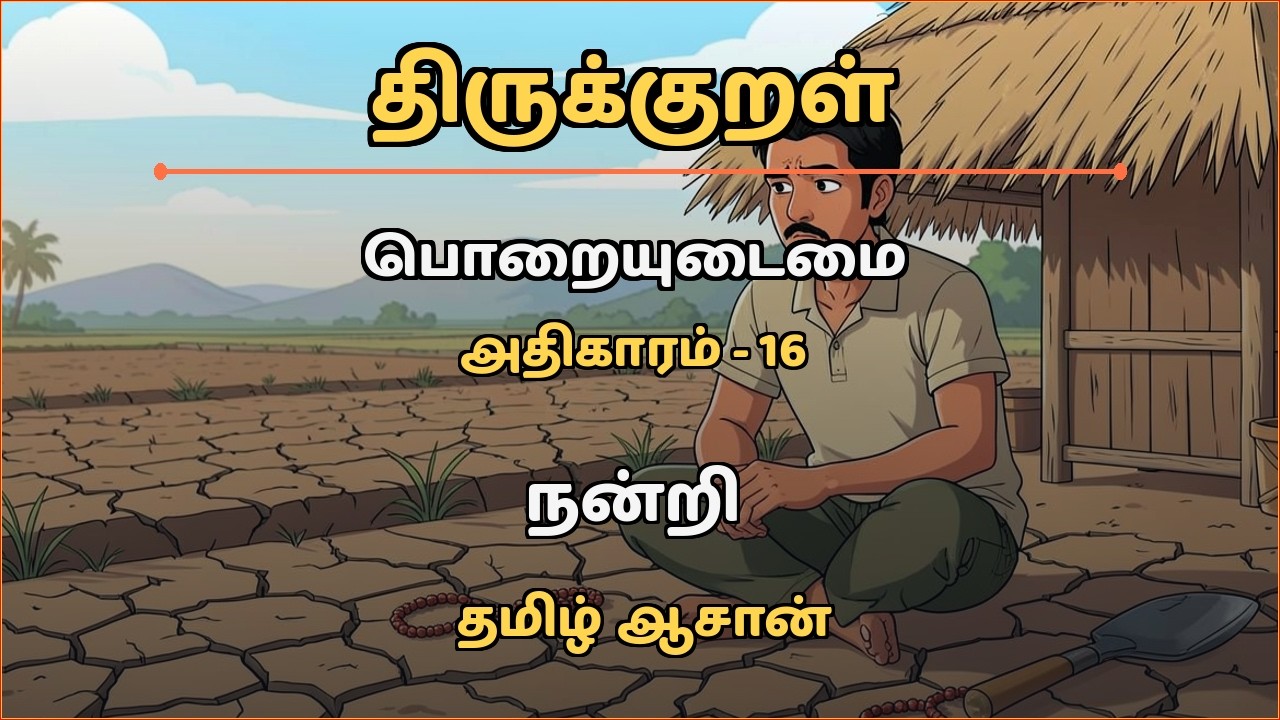
Thirukkural on Patience and Forbearance (Chapter 16: Kural 151–160)
Thirukkural 151
அகழ்வாரைத் தாங்கும் நிலம்போலத் தம்மை
இகழ்வார்ப் பொறுத்தல் தலை.
Translation: To bear with those who revile us, just as the earth bears up those who dig it, is the first of virtues.
This verse teaches that forbearance is nobler than anger. The earth endures diggers; the wise endure slanderers.
Thirukkural 152
பொறுத்த லிறப்பினை யென்றும் அதனை
மறத்த லதனினும் நன்று.
Translation: Forgive transgressions always, better still, forget them.
Forgiveness is good. But forgetting the hurt is even better. This is true emotional resilience.
Thirukkural 154
நிறையுடைமை நீங்காமை வேண்டின் பொறையுடைமை
போற்றி யொழுகப் படும்.
Translation: If you desire that greatness should never leave, foster the conduct of forbearance.
Patience maintains greatness. Without forbearance, honor fades.
Thirukkural 156
ஒறுத்தார்க்கு ஒருநாளை இன்பம் பொறுத்தார்க்குப்
பொன்றுந் துணையும் புகழ்.
Translation: Retaliation gives but a day's joy; forbearance brings glory for all time.
Revenge gives short pleasure. Patience gives lasting praise.
Thirukkural 158
மிகுதியான் மிக்கவை செய்தாரைத் தாந்தம்
தகுதியான் வென்று விடல்.
Translation: Let a man conquer by his forbearance those who wrong him with arrogance.
Conquer arrogance with patience. This is the highest strength.
Scientific Insights on Patience and Stress Management
Research shows that patience and faith-based coping reduce stress, depression, and anxiety. Key findings:
- Mindfulness and patience practices lower cortisol levels.
- Faith-based coping increases meaning-making during hardship.
- Gratitude and forgiveness improve emotional regulation.
- Community support reduces isolation during hard times.
These practices mirror Quranic sabr and Thirukkural forbearance.
Faith-Based Coping Strategies
1. Acceptance with Hope
Acknowledge pain, but believe better days will come. This mirrors 2:155–156.
2. Forgiveness Over Revenge
Choose peace over anger, as taught in 49:10.
3. Gratitude Daily
Write three things you are grateful for each day.
4. Community Support
Connect with friends, family, or a spiritual group.
5. Prayer and Reflection
Spend time in quiet reflection or prayer daily.
Conclusion
Patience is not weakness; it is strength with meaning. Both the Quran and Thirukkural teach that enduring hardship with faith, humility, and hope builds resilience. Modern science confirms that these practices reduce stress and improve mental health.
When life becomes heavy, remember 2:155–156: patience brings good news. Remember 39:10: the patient receive unlimited reward. Remember Thirukkural 151: forbearance is like the earth that endures diggers. Remember Thirukkural 156: revenge gives one day's joy, patience gives glory forever.
Download the Quran App
Read and reflect on Quran verses anytime through Al Quran Multilingual:

Jinosh Nadar
Founder of Al Quran Multilingual. Dedicated to making Islamic wisdom accessible.