The Power of Shared Values: How to Build a Support System That Lasts
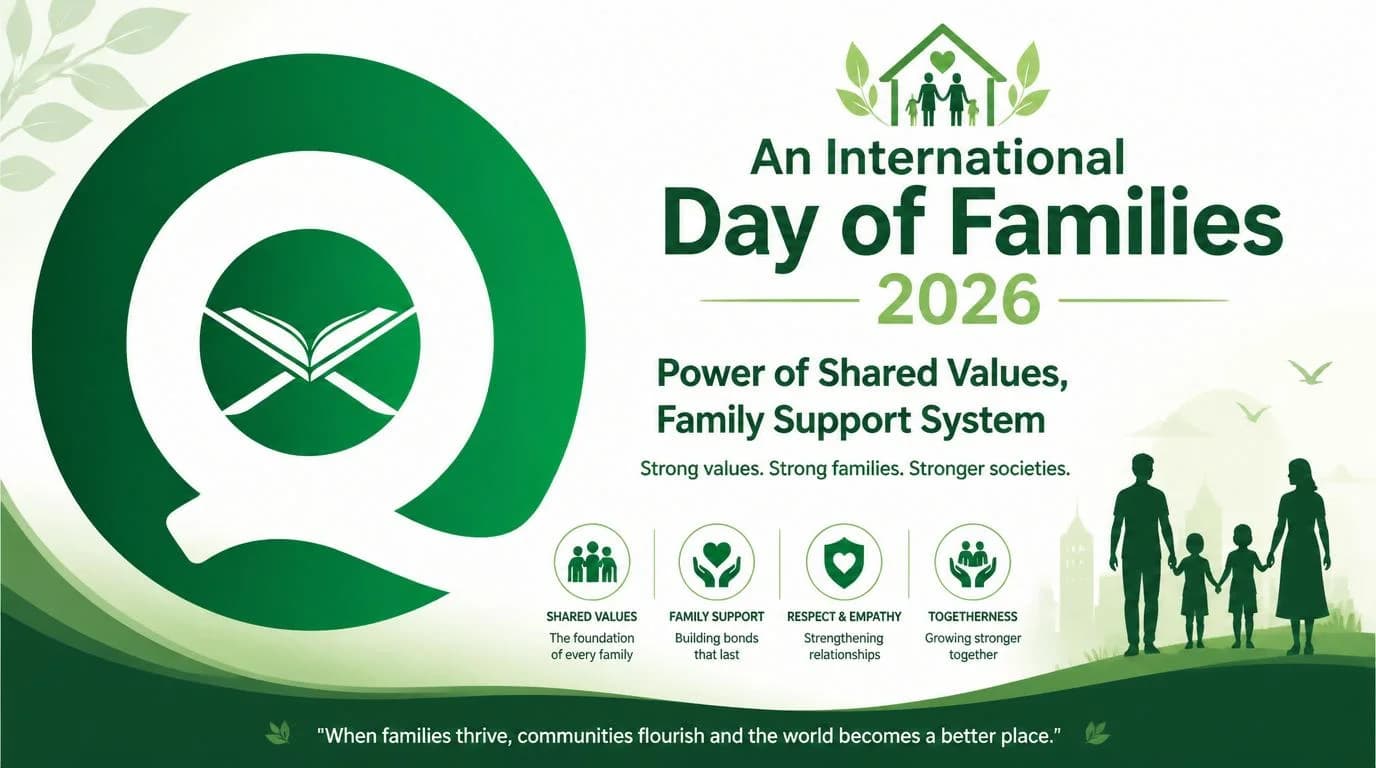
The world becomes chaotic quickly. Careers shift, money gets tight, responsibilities multiply, health fails, and people often discover that success alone does not keep the heart grounded. What keeps a person steady is not just ambition, but a support system—a family structure, a tribe, a circle of values, and a home where people lift one another up.
International Day of Families is a reminder that family is not only a social unit. It is a place of formation, correction, protection, and memory. When values are shared, families become strong enough to survive pressure, betrayal, and uncertainty. When values collapse, even a large house can feel empty.
History of the Day
International Day of Families is observed every year on May 15 to highlight the importance of families as the basic unit of society. It was established by the United Nations to encourage awareness of family-related issues and the role families play in social development, emotional stability, and the upbringing of future generations.
The day is not only about celebration. It is also about reflection. It asks whether families are healthy, whether they are united by values, and whether they are truly helping members grow in faith, character, and responsibility.
For communities like ours, this day is especially meaningful because family is not just a private bond. It is the first school of ethics, religion, discipline, hospitality, sacrifice, and love.
A Family That Holds You
A real support system is not built in a day. It is built through years of shared meals, shared struggle, shared prayer, shared mistakes, and shared forgiveness. A family becomes powerful when its members act like pillars, not burdens.
When a person is weak, the family should not crush them. It should support them.
When a child is confused, the family should not mock them. It should guide them.
When money is tight, the family should not divide. It should unite.
This is the heart of the topic: a family that lasts is not one that is perfect, but one that keeps returning to mercy, responsibility, and accountability.
Types of Families
Nuclear Family
A nuclear family usually consists of parents and children living together in one household. It can offer privacy, independence, and simple decision-making. Many modern families prefer this structure because it feels easier to manage in a fast-moving world.
But when nuclear families become isolated from elders, relatives, and wider support, they can also become emotionally fragile. One illness, one financial loss, or one crisis may place too much pressure on too few shoulders.
Single Parent Family
A single parent family is often formed through loss, separation, abandonment, or necessity. These families deserve respect, not judgment. A single parent often carries extraordinary strength, sacrifice, and resilience.
The challenge is that the emotional, financial, and practical load can become overwhelming without external support. That is why community and extended family matter so much.
Joint Family
A joint family brings generations together under one roof or within one support system. This model creates shared responsibility, collective wisdom, and built-in companionship.
When functioning with fairness and respect, joint families can be one of the strongest social structures available. Children grow with more caregivers, elders are respected, costs are shared, and emotional loneliness is reduced.
Why Islam Favors Tribe and Joint Support
Islam encourages unity, kinship, mercy, and responsibility within family and society. The believer is not meant to live as an isolated island. The Quran, the Sunnah, and Islamic ethics all emphasize care for parents, relatives, neighbors, orphans, and the vulnerable.
A joint family system often naturally supports these values because it creates closeness between generations and distributes responsibility. Grandparents, uncles, aunts, and cousins all play a role in emotional and moral formation.
Benefits of Joint Families
- Children grow up with more guidance.
- Elders are not abandoned.
- Financial burdens are shared.
- Family traditions are preserved.
- Problems are discussed collectively.
- Crisis recovery becomes easier.
Role of Grandparents
Grandparents bring something no app, no school, and no social media can replace: lived wisdom. They have seen failure, survival, sacrifice, and change. They teach patience without lecture, and love without condition.
Their stories ground younger generations. Their blessings steady the home. Their presence often becomes the quiet reason a family stays together.
Happiness and Guidance of Grandparents
A home with grandparents often has more warmth, more discipline, and more memory. Children hear stories from the past. Parents get support. Elders feel needed rather than discarded. Their happiness becomes part of the family’s emotional health.
Why Nuclear Family Can Be Risky
A nuclear family is not wrong, but it can become the worst option when it turns into isolation, ego, and emotional distance. If the only adults in the house are overwhelmed, tired, and unsupported, the home becomes fragile.
The danger is not small family size by itself. The danger is when a family stops acting like a family. When relatives do not speak, when elders are treated as obstacles, and when children are raised without the influence of broader kinship, the structure weakens.
A joint family, or at least a tribe-like support network, can protect against this collapse by keeping everyone connected.
Financial Benefits of Joint Family
One of the biggest advantages of joint families is financial stability. Shared living can reduce the cost of rent, electricity, food, transportation, childcare, and elder care.
When the family acts together:
- major expenses are shared,
- emergency support is available,
- children’s needs are managed better,
- elders are cared for more affordably,
- and savings become possible faster.
In difficult times, money is not only money. It is dignity, peace, and survival. A family that shares resources wisely is often more resilient than one that lives in isolation.
Betrayal of Family
A person who betrays their own family loses trust at the deepest level. Family should be the place where responsibility is highest. Every member must be a pillar of the family, not a burden to it.
When someone exploits family trust, refuses responsibility, or uses their position only for self-interest, the emotional damage can last for years. Betrayal inside the family cuts deeper than ordinary conflict because it breaks the assumption of safety.
It is not wise to glorify public success while ignoring private responsibilities. A person’s character is often revealed most clearly at home.
It is always better to be the one who strengthens the family than the one who weakens it.
Quran View on Family
The Quran presents family life as a place of mercy, affection, and protection. It is not built on domination, but on balance and compassion.
Quran 30:21
“And among His signs is that He created for you from yourselves mates that you may find tranquility in them; and He placed between you affection and mercy.”
This verse shows that family is meant to create tranquility, not constant fear. Marriage, home, and kinship should be sources of love and mercy, not only obligation.
Read this verse on our website:
https://alquranjino.online/book/ara_quransimple/30/21
Quran 66:6
“O you who believe, protect yourselves and your families from a Fire whose fuel is people and stones...”
This verse teaches responsibility. A believer must not only protect their own faith, but also guide their family toward goodness, discipline, and truth.
Read this verse on our website:
https://alquranjino.online/book/ara_quransimple/66/6
Story Reflection
A father may earn the money, but if he does not build faith and character in the home, the family may still collapse. A mother may hold the emotional center of the house, but if the children are not taught values, they may drift. A grandparent may bring wisdom, but if the younger generation refuses to listen, the link is broken.
The Quran reminds us that family is a trust, not just a possession.
Sangam Literature References
Tamil literature also deeply values family, household life, and social order. Sangam poems reflect the human world in its emotional, practical, and cultural layers.
Agananooru 86 – Marutham
The poem describes a domestic and marital setting with festive household imagery, showing how family life and social order are woven into Tamil life and literature.

This poem is a reminder that family is not merely a modern social concept. It has always been central to Tamil civilization.
Agananooru 136 – Marutham
This verse again places domestic harmony, wedding-related imagery, and kinship inside the emotional architecture of Tamil life.
Watch the reference video here:
 ▶ Watch on YouTube
These references show that family, home, and relation were never seen as secondary in Tamil thought. They were considered part of cultural strength and moral continuity.
Thirukkural on Family Life
Thirukkural Chapter 5 and Chapter 6 offer deep insight into home, partnership, and household responsibility.
Chapter 6 – வாழ்க்கைத் துணைநலம்
The Kural tradition treats the spouse and the household as a serious moral foundation.
Chapter 5 – இல்வாழ்க்கை
This chapter explains the dignity of family life, responsibility, hospitality, and the moral duty of householders.
Selected Kural Reflections
Kural 51
A good life partner is one who has the qualities needed for a household and who supports the family’s growth.
Kural 52
If a spouse lacks household virtue, even a great life loses much of its value.
Kural 53
If the wife has virtue, what is lacking? If she lacks virtue, what is there?
Kural 54
If chastity and steadfastness are present, what greater greatness can there be?
Kural 55
A devoted wife’s prayers are powerful and symbolic of the spiritual strength of the home.
Kural 56
A woman who protects herself, protects her husband, and preserves family honor stands firm in virtue.
Kural 57
The true protection of a woman is her own character and self-restraint.
Kural 58
A wife who supports her husband can attain great honor.
Kural 59
Without a virtuous spouse, there is no proud standing before others.
Kural 60
Family harmony is the true auspiciousness of the home, and good children are its ornament.
Chapter 5 Selected Reflections
Kural 41
A householder is one who stands as support for the righteous, the needy, and the guests.
Kural 42
A householder is the support of renunciants, the poor, and those in distress.
Kural 43
One must protect and honor ancestors, gods, guests, relatives, and oneself.
Kural 44
Gathering wealth without shame and distributing food properly protects family order.
Kural 45
If a household has love and virtue, that itself is its beauty and purpose.
Kural 46
What more can one gain by leaving the path of household duty if one already lives it rightly?
Kural 47
One who lives householder life in harmony with virtue stands among the greatest.
Kural 48
A life lived in family duty, without losing virtue, is stronger than mere penance.
Kural 49
Household life is itself dharma when it avoids blame from others.
Kural 50
One who lives rightly in the world is counted among the noble in heaven.
These verses strongly support the idea that family life is not a compromise. It is a noble path when lived with integrity.
Disadvantages of Joint Family
A joint family is not perfect. It can also face problems.
- Favouritism can create resentment.
- Resources may be distributed unfairly.
- Individual decisions can be controlled too tightly.
- Privacy may be limited.
- Conflicts can become harder to resolve.
The answer is not to reject the joint family idea completely, but to improve it with fairness, communication, and respect.
A healthy family is not one where everyone is forced to agree. It is one where differences exist, but values are still shared.
Islam and Culture
It is important not to mix culture with deen.
Just because elders did something for years does not automatically make it Sunnah. Even older generations can make mistakes. Respect for elders should never mean blind acceptance.
The right approach is simple:
- Read the Quran yourself.
- Follow what is clear.
- Teach the younger generation.
- Correct inherited mistakes with wisdom.
- Keep what is good, and leave what is wrong.
Islam is not weakened by truth. It is strengthened by truth.
Culture can be valuable, but it must always be measured against revelation, not treated as revelation.
Closing Reflection
A strong family is not built by accident. It is built by values: mercy, responsibility, patience, truth, and shared purpose. Whether the structure is nuclear, single-parent, or joint, the deeper question is the same: do the members act like a support system?
The home becomes powerful when people are pillars for one another. It becomes weak when people are burdens to one another. And it becomes blessed when Qur’an, wisdom, respect, and duty live together under one roof.
In a restless world, family may be the most important tribe a person has.
Download the App for Daily Inspiration
For reading, reflection, and daily inspiration, you can keep the Quran close through the Al Quran Multilingual app.
Android:
https://play.google.com/store/apps/details?id=jino.quran.app
iOS:
https://apps.apple.com/in/app/al-quran-multilingual/id6738510896
Desktop:
https://github.com/jinosh05/Al-Quran-Multilingual-Desktop/releases
Web:
https://alquranjino.online
And for more spiritual and reflective video content, explore my YouTube channel videos here:
https://www.youtube.com/@JinoshPrabhuraj
The Quran is available in multiple languages, with interlinked reading that helps the whole family learn together. Reading it as a family can become one of the strongest shared values in the home.

Jinosh Nadar
Founder of Al Quran Multilingual. Dedicated to making Islamic wisdom accessible.