Salliyargal (2026): A Documented History Silenced—and the Politics Behind Its Release
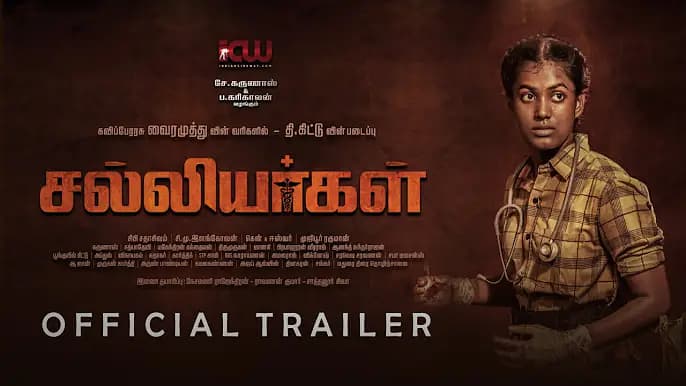
Salliyargal (2026): A Documented History Silenced—and the Politics Behind Its Release
January 2, 2026 marked not a theatrical celebration, but a digital defiance. The Tamil film Salliyargal (சல்லியர்கள்), a harrowing documentation of the Sri Lankan Tamil genocide, bypassed traditional cinema halls and released directly on OTT Plus after being systematically denied theatrical space across Tamil Nadu.[1][2][3]
This wasn't a creative choice—it was forced exile from the big screen, orchestrated by multiplex giants, political interests, and a system designed to bury inconvenient truths.
What is Salliyargal? The Story Behind the Film
Salliyargal (2024/2026) is a Tamil-language documentary-drama that chronicles the final days of the Sri Lankan Civil War (2009), specifically the Mullivaikkal Massacre, where an estimated 40,000-70,000 Tamil civilians were killed in a matter of weeks.[4][5]
The Film's Focus: Medical Camp Attack
The movie dramatizes a specific, documented incident: Sri Lankan military forces attacking medical camps, where Tamil doctors and nurses were treating wounded civilians in declared "No-Fire Zones".[5][4]
According to UN reports and human rights investigations:
- Hospitals were deliberately shelled
- Medical personnel were targeted and killed
- Civilians seeking refuge in UN-designated safe zones were massacred[4][5]
Director T. Kittu and producer/actor Karunas took on the task of bringing this suppressed history to Tamil audiences.[6][7]
Cast and Crew
- Director/Writer: T. Kittu
- Producers: S. Karunas, P. Karikalan
- Cast: Karunas, Sathyadevi, Thirumurugan, Janaki, Mahendran, Nagaraj
- Music: Ken & Eshwar
- Lyrics: Vairamuthu & T. Kittu[8][6]
IMDb Rating: 8.7/10 (as of early 2026)[8]
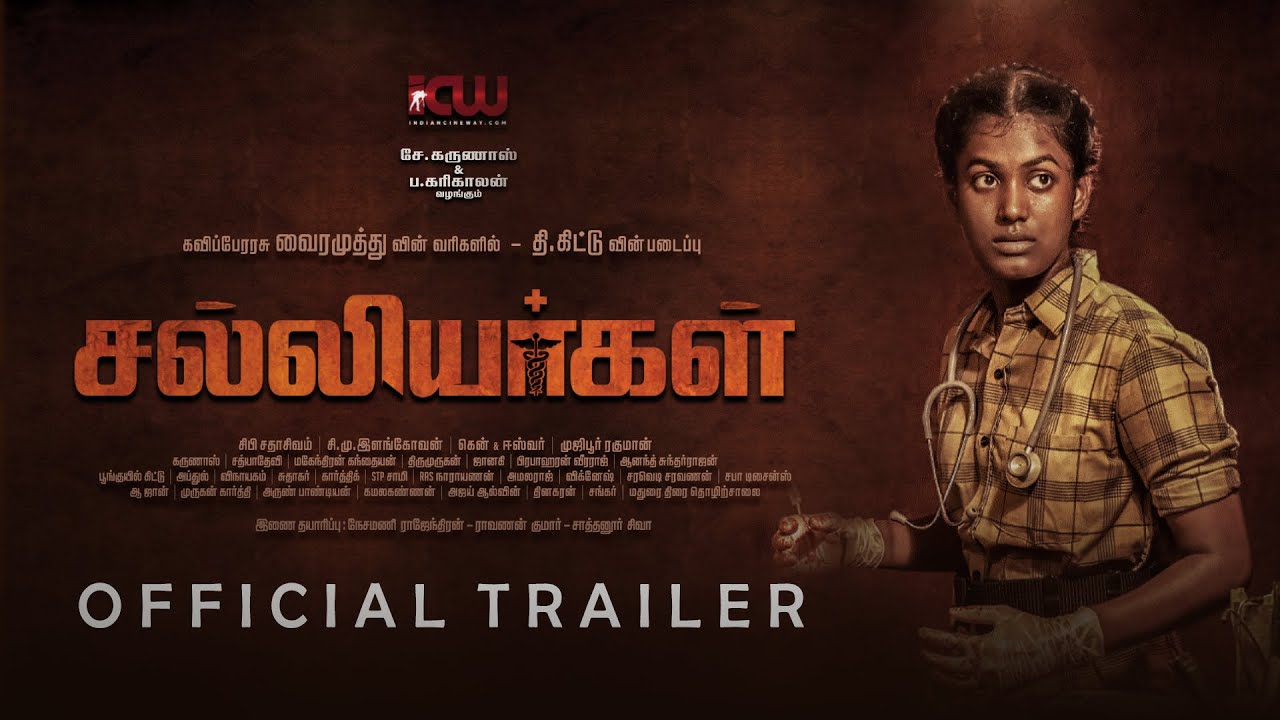
Watch the official trailer:
The Release Controversy: Only 27 Screens in All of Tamil Nadu
The Original Plan: Theatrical Release on January 1, 2026
Salliyargal was scheduled for a theatrical release on January 1, 2026.[2][1]
What happened instead:
- Only 27 theaters across Tamil Nadu agreed to screen the film[9][1]
- PVR-INOX (India's largest multiplex chain) refused to allocate even a single screen[1][9]
- Other Tamil-owned multiplexes also declined or offered minimal slots[9]
Producer Suresh Kamatchi's Response: "Modern Untouchability"
Producer Suresh Kamatchi (who backed the film's distribution) called this "modern untouchability" against small Tamil films that challenge powerful narratives.[1]
In a press conference, he stated:
- Tamil Nadu has 800+ theaters and 1,200+ screens
- Yet only 27 screens were made available for a critically important Tamil film
- Meanwhile, Hindi films and corporate-backed projects dominate PVR's screens[9][1]
His decision:
Rather than accept a token release, the film was pulled from theaters entirely and released on OTT Plus on January 2, 2026.[3][10][1]
Watch it here:
https://www.ottplus.in/v/17PgoU1b5m[3]
Why Was This Film Suppressed? The Political Dimensions
1. DMK's Complicity in the Sri Lankan Genocide (2009)
The Sri Lankan Tamil genocide occurred in 2009, during:
- Central Government: Congress-led UPA (Prime Minister Manmohan Singh)
- Tamil Nadu Government: DMK (Chief Minister M. Karunanidhi)[11][12]
Historical Record:
- India supplied weapons and intelligence to the Sri Lankan military during the genocide[4]
- The DMK, despite its pro-Tamil rhetoric, remained in the UPA coalition until 2013[11]
- Karunanidhi's "support" for Sri Lankan Tamils was largely symbolic—letters, statements, but no meaningful action[12][11]
When the Mullivaikkal massacre was happening:
- No sanctions were imposed on Sri Lanka
- No asylum was offered to fleeing Tamil refugees
- India abstained or voted against UN resolutions condemning Sri Lanka[11]
2. Current DMK Government Under M.K. Stalin (2021–Present)
M.K. Stalin, Karunanidhi's son, is now Chief Minister of Tamil Nadu.
Why would his government want to bury Salliyargal?
- The film directly exposes the DMK's failure to support Sri Lankan Tamils during their darkest hour
- It reminds voters of the Congress-DMK alliance's complicity in genocide[12][11]
- With 2026 Tamil Nadu elections approaching, this is politically dangerous[1]
3. The Rise of Naam Tamilar Katchi (NTK) and Tamil Nationalism
Naam Tamilar Katchi (NTK), led by Seeman, has been growing rapidly in Tamil Nadu, especially among youth, by advocating:
- Tamil self-determination (Tamil Desiyam)
- Justice for Sri Lankan Tamils
- Rejection of Dravidian hypocrisy (DMK/AIADMK)[1]
Salliyargal aligns perfectly with NTK's narrative:
- It exposes DMK's betrayal
- It revives Tamil consciousness about the genocide
- It could galvanize Tamil nationalist sentiment ahead of elections[1]
The DMK fears this film could become a rallying cry for NTK and anti-DMK forces.
PVR and the Hindi Film Mafia: Corporate Colonization of Tamil Cinema
PVR's Pattern: Prioritizing Hindi Over Regional Films
PVR-INOX controls a significant portion of India's multiplex market, and its business model heavily favors:
- Bollywood (Hindi) films
- Hollywood blockbusters
- High-budget films from corporate studios
Tamil, Telugu, Malayalam, and Kannada films—especially small-budget or politically sensitive ones—are often:
- Given limited screens
- Pushed to inconvenient showtimes
- Dropped quickly if they don't open big[13][9]
Recent Example: Pushpa 2 vs PVR (December 2024)
Even the blockbuster Pushpa 2 (Telugu/pan-Indian hit) faced a showdown with PVR over screen allocation, with PVR removing all shows in North India temporarily because the distributor demanded 50% of screens.[13]
If a commercial juggernaut like Pushpa 2 is fought over, imagine the fate of a small Tamil political film like Salliyargal.
The Real Agenda: Hindi Linguistic and Cultural Domination
My Personal Opinion:
PVR's refusal to screen Salliyargal is not just business—it's cultural gatekeeping.
- Tamil films that challenge Indian state narratives (like Sri Lankan genocide, caste atrocities, etc.) are seen as threats
- PVR, as a corporate entity with close ties to North Indian political and business elites, has no incentive to amplify Tamil voices that question Indian nationalism
- This is soft censorship—you don't ban the film, you just make it invisible[9][1]
This is corporate colonization masquerading as "business logic."
Is This Destruction of History? Absolutely.
What Happens When Films Like This Are Suppressed
History is not just what's written in books—it's what's remembered, discussed, and emotionally felt by a people.
When a film like Salliyargal is denied theatrical release:
- Collective memory is weakened
- Younger generations don't learn about atrocities
- Perpetrators escape moral accountability
- Future genocides become easier to commit
The Sri Lankan government has systematically:
- Destroyed mass graves
- Banned independent investigations
- Intimidated Tamil journalists and activists[4]
The Indian government and DMK have been complicit in this erasure by:
- Not demanding UN-led war crimes tribunals
- Not granting asylum to Tamil refugees
- Not teaching the genocide in school curricula
Films like Salliyargal are one of the few ways this history survives.
The Importance of History in Islam: Quranic Perspective
1. Remembering the Past to Avoid Repeating It
Surah Al-Imran (3:137):
"There have been examples before you, so travel through the land and see what was the end of those who denied."
Read at: https://alquranjino.online/book/ara_quransimple/3/137
Meaning:
- Allah commands us to study history
- Learn from the rise and fall of nations
- Understand the consequences of injustice and oppression
The Sri Lankan genocide is a modern example of what happens when:
- A majority oppresses a minority
- International powers stand silent
- Victims are denied justice
2. Bearing Witness (Shahada) to Truth
Surah An-Nisa (4:135):
"O you who have believed, be persistently standing firm in justice, witnesses for Allah, even if it be against yourselves or parents and relatives."
Read at: https://alquranjino.online/book/ara_quransimple/4/135
Application:
- Muslims are commanded to bear witness to truth, even when it's politically inconvenient
- Documenting atrocities (through film, writing, testimony) is a form of shahada (witnessing)
- Salliyargal is bearing witness to the genocide
3. Preservation of Knowledge is a Trust (Amanah)
Surah Al-Baqarah (2:159):
"Indeed, those who conceal what We sent down of clear proofs and guidance after We made it clear for the people in the Scripture—those are cursed by Allah and cursed by those who curse."
Read at: https://alquranjino.online/book/ara_quransimple/2/159
Meaning:
- Hiding truth is a grave sin
- Those who have knowledge of oppression and suppress it are cursed
- This applies to:
- Politicians who deny the genocide
- Media that refuse to cover it
- Corporations (like PVR) that censor films about it
What Should People Learn From This?
1. Silence is Complicity
- The Congress and DMK were silent during the genocide
- That silence enabled the massacres
- Lesson: When injustice happens, speak—even if it costs you politically
2. Corporate Power is Political Power
- PVR's refusal to screen Salliyargal shows how economic gatekeepers control narratives
- Lesson: Support independent media, OTT platforms, and grassroots distribution
3. Tamil Identity Must Be Defended
- The Sri Lankan Tamil genocide was an attack on Tamil language, culture, and existence
- Lesson: Tamil unity and self-determination (Tamil Desiyam) are not "separatism"—they're survival
4. History Must Be Documented and Shared
- Films, books, testimonies, memorials—all are weapons against erasure
- Lesson: Watch Salliyargal, share it, discuss it, teach your children about it
Islamic Principles for Maintaining History
1. Oral and Written Preservation
Surah Al-Qamar (54:17):
"And We have certainly made the Quran easy for remembrance, so is there any who will remember?"
Read at: https://alquranjino.online/book/ara_quransimple/54/17
Principle:
- The Quran was preserved through both memorization and writing[14][15]
- Similarly, the genocide must be preserved through:
- Films (like Salliyargal)
- Books and articles
- Survivor testimonies
- Memorials and museums
2. Accountability Through Documentation
Surah Al-Kahf (18:49):
"And the record [of deeds] will be placed, and you will see the criminals fearful of what is in it. They will say, 'Oh, woe to us! What is this book that leaves nothing small or great except that it has enumerated it?'"
Read at: https://alquranjino.online/book/ara_quransimple/18/49
Application:
- On the Day of Judgment, every deed is recorded
- In this life, we must document crimes so perpetrators cannot escape
- Films like Salliyargal are a moral record of what happened
3. Teaching Future Generations
Surah Luqman (31:13):
"And [mention] when Luqman said to his son while he was instructing him…"
Read at: https://alquranjino.online/book/ara_quransimple/31/13
Meaning:
- Parents and elders must teach the next generation
- This includes teaching about history, justice, and oppression
- Watch Salliyargal with your family and discuss it
Download the Quran App: Learn Divine Justice in Tamil
📱 Al-Quran Multilingual App:
- Android: https://play.google.com/store/apps/details?id=jino.quran.app
- iOS/macOS: https://apps.apple.com/in/app/al-quran-multilingual/id6738510896
- Desktop: https://github.com/jinosh05/Al-Quran-Multilingual-Desktop/releases
- Web: https://alquranjino.online
Study Quranic verses on:
- Justice and bearing witness (4:135, 5:8)
- Preserving truth and history (2:159, 18:49)
- Standing against oppression (4:75)
Support Tamil Desiyam: Unity is Our Strength
Quotes to Unite Tamils Against Corporate and Political Criminals
From Tamil Tradition:
"ஒற்றுமையே பலம்" (Unity is strength)
From Thirukkural:
"அன்பிற்கும் உண்டோ அடைக்கும் தாழ் வன்புக்கும் உண்டோ வரம்பு?"
(Is there a bolt that love cannot open? Is there a limit to hatred's cruelty?)
Meaning:
- Love and unity among Tamils can overcome any barrier
- Division and hatred have no end—resist it
From Islamic Tradition:
Surah Al-Anfal (8:46):
"And obey Allah and His Messenger, and do not dispute and [thus] lose courage and [then] your strength would depart."
Read at: https://alquranjino.online/book/ara_quransimple/8/46
Meaning:
- Disunity weakens—Tamils must stand together
- Whether Dravidian, Islamist, Christian, Hindu—Tamil identity unites us
My Personal Opinion: What Salliyargal Means
As a Tamil Muslim developer and content creator, I see Salliyargal as more than a film—it's a test of our collective conscience.
Questions I'm asking:
- Will we let PVR and corporate giants decide what Tamil stories get told?
- Will we let the DMK bury its sins through censorship?
- Will we let the Sri Lankan Tamil genocide be forgotten like so many other atrocities?
My answers:
- Support OTT Plus and independent Tamil platforms
- Share Salliyargal widely—make it go viral
- Vote out parties that betray Tamils (DMK, Congress, AIADMK)
- Build Tamil unity across religious and caste lines
This is not just about one film—it's about whether we control our own narrative or let Delhi and Colombo decide for us.
Watch Salliyargal Now
OTT Plus:
https://www.ottplus.in/v/17PgoU1b5m[3]
IMDb Page:
https://www.imdb.com/title/tt24075166/[8]
Trailer:
Join the Movement
Telegram Community:
https://t.me/+do4xJsQLTbNhZTc1
Discuss:
- Tamil cinema and corporate censorship
- Sri Lankan Tamil genocide and justice
- Islamic perspectives on history and oppression
- Building Tamil Desiyam
Remember:
- 40,000+ Tamil civilians were massacred in 2009
- India and DMK were complicit through silence
- Films like Salliyargal are our weapons against erasure
- Your view, your share, your voice matters
Don't let this history die. Watch. Share. Act.

Jinosh Nadar
Founder of Al Quran Multilingual. Dedicated to making Islamic wisdom accessible.