Tamil Lexicography Day: Learning from Constantine Joseph Beschi's Love for Tamil and the Islamic Path of Spreading Goodness
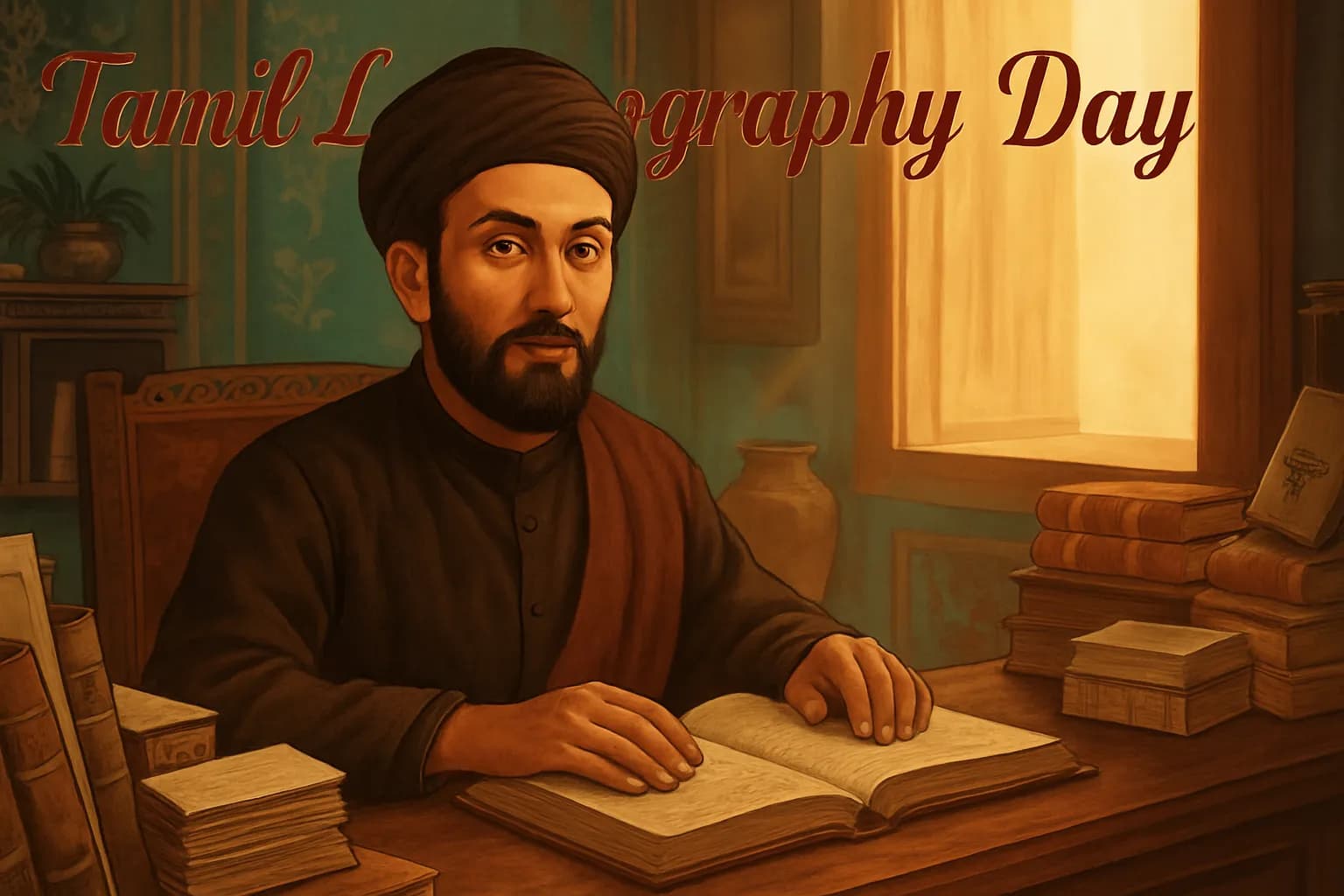
Tamil Lexicography Day: Learning from Constantine Joseph Beschi's Love for Tamil and the Islamic Path of Spreading Goodness
November 8, 2025 - Today, as we observe Tamil Lexicography Day, we celebrate not just the Tamil language's extraordinary richness but also the remarkable individuals who dedicated their lives to preserving and developing it—regardless of their own cultural or religious backgrounds. Among these luminaries stands Constantine Joseph Beschi (1680-1747), an Italian Jesuit missionary whose profound love for Tamil transformed him into one of the language's greatest poets and lexicographers, known affectionately as வீரமாமுனிவர் (Veeramaamunivar - "The Brave Sage").
As a Muslim who deeply values linguistic diversity—evident in my work on the AlQuran Multilingual platform that makes the Holy Quran accessible in Tamil and 90+ languages—I find Beschi's story profoundly instructive. His example demonstrates a timeless truth that resonates powerfully with Islamic teachings: genuine love, sincere service, and respectful engagement inspire hearts far more effectively than force, coercion, or violence ever could.
The Holy Quran explicitly commands believers to repel evil with good, teaching that this approach transforms enemies into friends. As Allah says in Surah Fussilat (41:34):
وَلَا تَسْتَوِي الْحَسَنَةُ وَلَا السَّيِّئَةُ ۚادْفَعْ بِالَّتِي هِيَ أَحْسَنُ فَإِذَا الَّذِي بَيْنَكَ وَبَيْنَهُ عَدَاوَةٌ كَأَنَّهُ وَلِيٌّ حَمِيمٌ
"Good and evil are not equal. Repel evil with what is better, and the one you have enmity with will become like a close friend."
This principle—repelling evil with good—is precisely what Beschi embodied in his approach to Tamil culture and language. Rather than imposing his faith through force or denigrating Tamil traditions, he immersed himself in Tamil with such devotion that he became one of its greatest masters. This article explores his remarkable journey and what it teaches us about the Islamic way of spreading faith through love, knowledge, and service.
The Birth and Early Life of Constantine Joseph Beschi
Constantine Joseph Beschi was born on November 8, 1680, in Castiglione delle Stiviere, a small town in the Province of Mantua in northern Italy. Born into a devout Catholic family during a period of intense European religious and intellectual ferment, young Beschi received excellent education befitting his social station.
At the age of 18 (in 1698), Beschi joined the Society of Jesus (Jesuits)—a Catholic religious order founded by Ignatius of Loyola known for its rigorous intellectual training, missionary zeal, and emphasis on education. The Jesuits had already established missions across Asia, including in India, and were renowned for their approach of cultural adaptation—learning local languages, understanding indigenous philosophies, and engaging respectfully with non-Christian civilizations.
After completing his theological and philosophical studies, Beschi was ordained as a priest. In 1710, at age 30, he volunteered for missionary work in India—a decision that would change not just his life but the course of Tamil literary history. He arrived in Goa, then the Portuguese colonial capital in India, before proceeding to the Madurai Mission in what is now Tamil Nadu.
This journey—from a small Italian town to the heart of Tamil civilization—would result in one of history's most remarkable cross-cultural intellectual achievements.
Why Did Beschi Come to Tamil Nadu?
Beschi came to Tamil Nadu as part of the Jesuit Madurai Mission, which had been established in 1606 by Italian Jesuit Roberto de Nobili. This mission operated on a revolutionary principle for its time: deep cultural adaptation and respect for local civilization.
The Madurai Mission's Unique Approach
Unlike many colonial-era Christian missions that dismissed indigenous cultures as "heathen" or "barbaric," the Madurai Mission adopted what came to be known as the "accommodation method":
- Learning local languages to a high scholarly level
- Studying indigenous philosophical and religious texts to understand the worldview of the people
- Adopting local customs and dress that didn't contradict Christian doctrine
- Engaging in intellectual dialogue with learned Hindus rather than simple proselytization
- Contributing to local culture through literary and scholarly work
This approach was inspired partly by the Jesuit missions in China (where Matteo Ricci had similarly engaged with Confucian scholarship) and partly by the recognition that Tamil civilization was extraordinarily sophisticated—possessing ancient literature, complex philosophy, and a highly developed grammatical tradition.
Beschi came to Tamil Nadu not as a conquering missionary imposing foreign culture but as a student eager to learn from Tamil civilization while sharing his own faith.
Islamic Parallels: The Prophet's Approach to Different Cultures
This respectful approach resonates deeply with how Prophet Muhammad (peace be upon him) engaged with different communities. When the Prophet migrated to Medina, he:
- Studied existing tribal customs and retained those compatible with Islamic ethics
- Engaged in dialogue with Jewish and Christian scholars rather than dismissing them
- Formed treaties respecting diverse communities' rights
- Appreciated Arab literary excellence in poetry while rejecting its content glorifying tribalism and injustice
The Charter of Medina (Sahifat al-Madinah), established by the Prophet, recognized Jews as a community with their own religious practices while building a multi-faith political framework. This demonstrates that engagement with other cultures from a position of respect and learning is authentically Islamic.
How Did Beschi Master Tamil?
Beschi's mastery of Tamil is among the most remarkable linguistic achievements in history. Within a few years of arriving in Tamil Nadu, he had not only learned conversational Tamil but had mastered:
- Classical Tamil grammar as codified in the Tolkappiyam (dated to 3rd century BCE-CE)
- Prosody and poetic meters used in Tamil literature for over 2,000 years
- Literary conventions of different Tamil genres (devotional, didactic, narrative, etc.)
- Philosophical vocabulary needed to discuss complex theological and metaphysical concepts
- Folk idioms and colloquial usage that made his work accessible to common people
The Method: Immersion and Humility
Historical records indicate that Beschi:
- Found Tamil teachers who were willing to instruct a foreigner in Tamil's intricacies
- Studied classical Tamil texts including the Thirukkural, Silappathikaram, and devotional literature
- Lived among Tamil people rather than in isolated European enclaves
- Dressed in Tamil style—wearing the simple cloth of a Tamil ascetic rather than European clerical robes
- Adopted the lifestyle of a Tamil scholar—vegetarianism, simplicity, dedication to learning
- Practiced writing Tamil poetry using traditional meters and literary devices
Most importantly, Beschi approached Tamil with genuine humility—recognizing that Tamil possessed a literary and philosophical sophistication equal to or exceeding European languages. He saw Tamil not as a "primitive" language to be tolerated but as a vehicle of profound wisdom worthy of lifelong study.
Islamic Emphasis on Language Learning
The Islamic tradition strongly encourages learning other languages to better understand and communicate with different peoples. Prophet Muhammad (peace be upon him) himself reportedly asked Zayd ibn Thabit to learn Hebrew and Syriac to facilitate communication with Jewish and Christian communities.
The Quran itself emphasizes linguistic diversity as a divine sign:
Surah Ar-Rum (30:22):
وَمِنْ آيَاتِهِ خَلْقُ السَّمَاوَاتِ وَالْأَرْضِ وَاخْتِلَافُ أَلْسِنَتِكُمْ وَأَلْوَانِكُمْ
"Among His signs is the creation of the heavens and earth, and the diversity of your languages and colors."
When Muslims learn other languages with respect and sincerity—as I have endeavored to do through the AlQuran Multilingual project—we honor this divine sign and facilitate genuine dialogue.
Did Beschi Spread Christianity in Tamil Nadu?
Yes, Beschi did engage in Christian missionary work—that was his primary purpose in coming to Tamil Nadu. However, the manner in which he did so offers crucial lessons for how any faith should be shared.
A Different Kind of Missionary Work
Beschi's approach differed fundamentally from forceful proselytization:
-
No coercion or political pressure: Unlike Portuguese and later British colonial powers that sometimes used force to convert, Beschi relied purely on persuasion through service and scholarship
-
Respect for existing culture: Rather than demanding that converts abandon Tamil culture, Beschi argued that Tamil customs compatible with Christianity should be retained
-
Intellectual engagement: He debated philosophical and theological points with Hindu scholars using Tamil texts and logical argumentation, not dismissive rejection
-
Service to all: His Tamil literary and grammatical works benefited all Tamil speakers regardless of religion
-
Contribution to Tamil literature: Even Hindus and later secular Tamil scholars recognize Beschi's Tamil works as genuine contributions to Tamil literary heritage
Conversion Through Example, Not Force
Historical records suggest that Beschi's conversions came primarily through:
- Personal example of scholarship and service
- Medical and social work among the poor and marginalized
- Literary excellence that demonstrated Christian theology could be expressed in sophisticated Tamil
- Genuine relationships built over years of living among Tamil people
This is precisely the method the Quran prescribes for spreading faith.
What Inspired Beschi's Love for Tamil?
Several factors inspired Beschi's deep engagement with Tamil:
1. Recognition of Tamil's Antiquity and Sophistication
Beschi quickly recognized that Tamil was not a "primitive vernacular" but an ancient classical language with a literary tradition comparable to Latin, Greek, or Sanskrit. The existence of:
- Sangam literature (300 BCE - 300 CE) demonstrating 2,000+ years of literary continuity
- Thirukkural—an ethical work of universal wisdom composed around 5th century CE
- Complex grammatical tradition codified in Tolkappiyam
- Rich philosophical vocabulary capable of expressing complex theological and metaphysical concepts
This discovery likely humbled Beschi and inspired genuine appreciation rather than condescending "missionary" attitude.
2. The Beauty of Tamil Poetry
Tamil poetry operates with sophisticated prosody, intricate wordplay, and layered meanings. Genres like Akam (interior/love) and Puram (exterior/war and ethics) poetry, the use of Thinai (landscape-mood associations), and complex Yappilakkanam (prosody rules) demonstrate artistic achievement that equals any world literature.
Beschi fell in love with this beauty and wanted to create Christian devotional literature that matched Tamil literary standards rather than offering inferior foreign imports.
3. The Tamil People's Devotion and Spirituality
Tamil people's deep bhakti (devotion) expressed in Saivite and Vaishnavite traditions impressed Beschi. The emotional intensity, philosophical depth, and literary excellence of Tamil devotional poetry (by poets like the Nayanmars and Alvars) showed him that Tamils were profoundly spiritual people whose religiosity could be channeled toward Christianity through respectful engagement.
4. Personal Transformation Through Cross-Cultural Encounter
Living among Tamil people, learning their language and customs, and appreciating their civilization likely transformed Beschi's own worldview. This is the power of genuine cross-cultural encounter—it changes both parties, creating mutual enrichment rather than one-way domination.
Beschi's Monumental Contributions to Tamil Language
Beschi's contributions to Tamil are so significant that he is honored by Tamil scholars regardless of their own religious affiliations. This is the mark of true service—that even those who don't share your faith recognize and value your work.
1. தேம்பாவணி (Thembavani) - The Epic of Divine Grace
Beschi's masterpiece is the Thembavani—a 36,000-line Christian epic poem composed in classical Tamil verse, narrating the life of St. Joseph (husband of Mary, mother of Jesus). This work is remarkable because:
- Uses classical Tamil poetic conventions including complex meters and literary devices
- Employs Tamil mythological imagery appropriately adapted for Christian narrative
- Demonstrates complete mastery of Tamil literary traditions
- Is recognized by Tamil scholars as a genuine contribution to Tamil epic literature
Even Hindu and secular Tamil literary critics acknowledge that Thembavani represents some of the finest Tamil poetry ever composed—regardless of its Christian content. This is because Beschi elevated the content through supreme literary artistry rather than expecting readers to accept inferior work because of religious sentiment.
2. சதுரகராதி (Chathurakarathi) - Tamil-Latin Dictionary
Perhaps Beschi's most practically important work is his comprehensive Tamil-Latin dictionary—one of the first detailed lexicographic works for Tamil. This dictionary:
- Catalogued thousands of Tamil words with precise definitions
- Distinguished between classical and colloquial usage
- Provided etymological information where available
- Made Tamil accessible to European scholars for the first time
- Set standards for subsequent Tamil lexicography
This work laid the foundation for modern Tamil lexicography and linguistics. Even today, scholars studying the history of Tamil language consult Beschi's dictionary for information about 18th-century Tamil usage.
3. வீரமாமுனிவர் இலக்கணம் (Veeramaamunivar's Grammar)
Beschi compiled a comprehensive Tamil grammar—a scholarly work explaining Tamil's grammatical structures to non-native speakers. This grammar:
- Systematized Tamil grammatical rules in a way accessible to foreign learners
- Explained classical Tamil prosody in detail
- Provided numerous examples from classical literature
- Became a standard reference for Tamil language education
4. Other Works
Beschi also composed:
- கிரிஸ்துபுராணம் (Kristupuranam) - A poetic narrative of Christ's life in Tamil
- சமய அரங்கேற்றம் (Samaya Arangettam) - Philosophical dialogues on Christian theology in Tamil
- ஆய்வேடு (Aayvedu) - Pastoral letters and catechetical works in Tamil
All of these works demonstrate supreme literary quality and respect for Tamil literary traditions.
The Name Changes: From Constantine to வீரமாமுனிவர்
Beschi underwent several name changes that reveal his evolving identity:
- Constantine Joseph Beschi - His birth name in Italian
- பெச்சி அய்யர் (Pechchi Ayyar) - Initial Tamilization
- வீரமாமுனிவர் (Veeramaamunivar) - "The Brave Sage"
The final name Veeramaamunivar was given by Tamil people themselves, recognizing:
- Veera (Brave) - His courage in mastering Tamil and engaging with Tamil civilization
- Maa (Great) - His excellence and achievements
- Munivar (Sage/Ascetic) - His scholarly and ascetic lifestyle
This is the highest honor—when people of a culture adopt you and give you a name in their language, recognizing you as one of their own despite your foreign origin.
Islamic Parallels: Names Reflecting Transformed Identity
In Islamic tradition, converts often take Arabic or Islamic names, but the Prophet also allowed people to retain their original names if they carried good meanings. Salman al-Farsi (Salman the Persian) retained his identity as Persian while being honored as one of the Prophet's closest companions.
Similarly, the Ansar (Helpers of Medina) and Muhajirun (Migrants from Mecca) maintained their distinct identities while united in Islamic brotherhood. Names reflected both unique identity and shared values.
What the Quran Teaches About Spreading Love and Goodness
The Islamic approach to spreading faith is explicitly articulated in numerous Quranic verses emphasizing love, wisdom, good conduct, and peaceful persuasion rather than force or coercion.
1. Repel Evil with Good: Transforming Enemies into Friends
Surah Fussilat (41:34-35):
وَلَا تَسْتَوِي الْحَسَنَةُ وَلَا السَّيِّئَةُ ۚ ادْفَعْ بِالَّتِي هِيَ أَحْسَنُ فَإِذَا الَّذِي بَيْنَكَ وَبَيْنَهُ عَدَاوَةٌ كَأَنَّهُ وَلِيٌّ حَمِيمٌ
"Good and evil are not equal. Repel evil with what is better, and the one you have enmity with will become like a close friend. But none is granted this except those who are patient, and none is granted it except one of great fortune."
This verse establishes the fundamental principle: responding to hatred with goodness, to hostility with kindness, to opposition with patience transforms relationships. This is precisely what Beschi did—rather than responding to potential Tamil resistance with aggression, he responded with love, service, and respect.
2. Call to God's Way with Wisdom and Beautiful Preaching
Surah An-Nahl (16:125):
ادْعُ إِلَىٰ سَبِيلِ رَبِّكَ بِالْحِكْمَةِ وَالْمَوْعِظَةِ الْحَسَنَةِ ۖ وَجَادِلْهُم بِالَّتِي هِيَ أَحْسَنُ
"Invite to the way of your Lord with wisdom and good instruction, and argue with them in a way that is best."
This verse outlines the Islamic methodology for spreading faith:
- Wisdom (Hikmah) - Understanding context, culture, and the right approach for each situation
- Good instruction (Maw'izah Hasanah) - Sharing knowledge in a way that touches hearts, not merely intellects
- Best argumentation - Engaging in dialogue respectfully, logically, and with genuine desire to understand others' perspectives
Beschi's approach exemplified all three: He gained wisdom by learning Tamil culture deeply, offered good instruction through beautiful Tamil literature, and engaged in respectful theological dialogue with Hindu scholars.
3. No Compulsion in Religion
Surah Al-Baqarah (2:256):
لَا إِكْرَاهَ فِي الدِّينِ ۖ قَد تَّبَيَّنَ الرُّشْدُ مِنَ الْغَيِّ
"There is no compulsion in religion. The right course has become clear from the wrong."
This verse explicitly forbids religious coercion. Islam must be accepted freely, through intellectual and spiritual conviction, not through force or pressure. Forced conversion is not only ineffective but contradicts Islamic teaching.
When Muslims violate this principle through violence or coercion, they betray Islam itself. The proper Islamic approach is persuasion through example, service, wisdom, and love—exactly what Beschi demonstrated.
4. Be Kind and Just to Non-Hostile Non-Muslims
Surah Al-Mumtahanah (60:8):
لَّا يَنْهَاكُمُ اللَّهُ عَنِ الَّذِينَ لَمْ يُقَاتِلُوكُمْ فِي الدِّينِ وَلَمْ يُخْرِجُوكُم مِّن دِيَارِكُمْ أَن تَبَرُّوهُمْ وَتُقْسِطُوا إِلَيْهِمْ ۚ إِنَّ اللَّهَ يُحِبُّ الْمُقْسِطِينَ
"Allah does not forbid you from dealing kindly and justly with those who have not fought you for your faith or driven you out of your homes. Indeed, Allah loves those who act justly."
This verse commands active kindness and justice toward non-Muslims who are not actively hostile. The Arabic word "Birr" (translated as "kindly") is the same word used to describe filial piety toward parents—suggesting Muslims should treat peaceful non-Muslims with family-like warmth and care.
5. Speak Good Words or Remain Silent
Surah Al-Isra (17:53):
وَقُل لِّعِبَادِي يَقُولُوا الَّتِي هِيَ أَحْسَنُ ۚ إِنَّ الشَّيْطَانَ يَنزَغُ بَيْنَهُمْ
"And tell My servants to say that which is best. Indeed, Satan induces dissension among them."
Muslims are commanded to always use the best, most beautiful speech—especially when engaging with others about religion. Harsh, condemnatory, or hateful speech serves Satan's agenda of creating division, not God's agenda of guiding people to truth.
6. Universal Mercy and Compassion
Surah Al-Anbiya (21:107):
وَمَا أَرْسَلْنَاكَ إِلَّا رَحْمَةً لِّلْعَالَمِينَ
"And We have not sent you (O Muhammad) except as a mercy to all the worlds."
Prophet Muhammad's mission is defined as universal mercy—not punishment, not conquest, but mercy to all creation. Muslims following the Prophet should therefore embody mercy in all interactions, making Islam attractive through compassion rather than repulsive through harshness.
7. Beautiful Patience in Face of Opposition
Surah Al-Ma'arij (70:5):
فَاصْبِرْ صَبْرًا جَمِيلًا
"So be patient with beautiful patience."
When facing opposition or rejection, Muslims are commanded to practice "Sabr Jameel" (beautiful patience)—patience without complaint, without bitterness, without aggression. This patience, accompanied by continued good conduct, eventually wins hearts.
8. Respect for People of Earlier Scriptures
Surah Al-Ankabut (29:46):
وَلَا تُجَادِلُوا أَهْلَ الْكِتَابِ إِلَّا بِالَّتِي هِيَ أَحْسَنُ
"And do not argue with the People of the Scripture except in a way that is best, except for those who commit injustice among them."
Even in theological debate with Christians and Jews, Muslims are commanded to use the best possible manner of argumentation—respectful, reasoned, and kind. This creates space for genuine dialogue rather than hostile confrontation.
9. Forgiveness and Overlooking Faults
Surah Ash-Shura (42:43):
وَلَمَن صَبَرَ وَغَفَرَ إِنَّ ذَٰلِكَ لَمِنْ عَزْمِ الْأُمُورِ
"But whoever is patient and forgives - indeed, that is of the matters requiring determination."
Forgiveness and patience in the face of offense is presented as requiring great courage and determination—more than retaliation requires. The brave choice is forgiveness and continued kindness, not revenge.
10. Kindness as the Defining Trait
Hadith - Sahih Muslim:
The Prophet Muhammad (peace be upon him) said:
"Allah is kind and loves kindness in all matters." (Sahih Muslim, Book 32, Hadith 78)
And in another hadith:
"Kindness is not in anything except that it beautifies it, and it is not removed from anything except that it disgraces it." (Sahih Muslim, Book 32, Hadith 79)
These prophetic teachings emphasize that kindness beautifies everything it touches, including religious practice and da'wah (invitation to Islam). When Muslims approach others with genuine kindness, Islam itself becomes beautiful and attractive.
What Thirukkural Teaches About Peace Through Love
The Thirukkural, which Beschi himself studied and admired, contains profound wisdom on achieving peace and harmony through love rather than force.
Kural 972: Equality of All Humans by Birth
தமிழ்: பிறப்பொக்கும் எல்லா உயிர்க்கும் சிறப்பொவ்வா செய்தொழில் வேற்றுமை யான்
"All human beings are equal by birth; distinctions arise only from their conduct and deeds."
Thiruvalluvar teaches universal human equality—a principle that should guide all religious engagement. No one is inherently superior or inferior based on birth, ethnicity, or original religion. This erases any justification for religious arrogance or forceful conversion.
Kural 80: Love Transcends All Differences
தமிழ்: அன்பின் வழியது உயிர்நிலை அஃதிலார்க்கு என்புதோல் போர்த்த உடம்பு.
"Love's path leads to unity; fearing love means fearing life itself."
Love creates unity across differences. When we approach interfaith engagement with genuine love—as Beschi did with Tamil culture—barriers dissolve and genuine understanding becomes possible.
Kural 291: Truth Must Be Beneficial
தமிழ்: வாய்மை எனப்படுவது யாதெனின் யாதொன்றும் தீமையிலாத சொலல்
"What is truth? Speaking words that cause no harm while remaining factually accurate."
Even when sharing religious truth, it must be done in ways that don't cause unnecessary harm. Harsh, condemning speech—even if doctrinally correct—violates the principle of beneficial truth.
Learning from Beschi: Practical Lessons for Muslim Da'wah
Beschi's example offers concrete lessons for how Muslims should engage in da'wah (invitation to Islam):
1. Master the Language and Culture
Before attempting to share Islam, deeply learn the language, culture, and worldview of the people you're engaging with. Superficial understanding leads to:
- Misunderstanding and offense
- Ineffective communication
- Inability to answer genuine questions
- Appearing arrogant or dismissive
Just as I've worked to make the Quran accessible in Tamil and 90+ languages through AlQuranJino, we must invest in genuinely understanding others' linguistic and cultural contexts.
2. Offer Genuine Service
Contribute to the community regardless of immediate religious results. Beschi's Tamil grammar and dictionary served all Tamil speakers—Hindu, Christian, and later Muslim and secular scholars. Similarly, Muslims should:
- Provide educational services to all
- Offer medical care without discrimination
- Contribute to arts, sciences, and culture
- Solve community problems collectively
Service without strings attached demonstrates Islamic values better than a thousand sermons.
3. Respect Existing Wisdom
Every culture possesses wisdom, beauty, and valuable traditions. Rather than dismissing everything as "wrong" or "inferior," Muslims should:
- Recognize truth wherever it exists (as the Prophet said, "Wisdom is the lost property of the believer")
- Appreciate cultural achievements of different civilizations
- Distinguish between what contradicts Islamic monotheism (which must be rejected) and what is culturally specific but compatible with Islam (which can be retained)
Beschi demonstrated this by appreciating Tamil literary and philosophical traditions while sharing Christian theology.
4. Earn Respect Through Excellence
Create work of such quality that even non-Muslims recognize and value it. Beschi's Tamil poetry is celebrated by Hindu scholars not because of its Christian content but because of its supreme literary merit. Similarly, Muslim contributions to science, arts, architecture, and literature throughout history attracted people to Islam through excellence.
5. Live the Values You Preach
Personal example speaks louder than words. Beschi lived simply, devoted himself to scholarship and service, and embodied the Christian values he taught. Muslims similarly must:
- Demonstrate Islamic ethics in business dealings
- Show Islamic compassion in treatment of others
- Practice Islamic justice in all relationships
- Exhibit Islamic humility despite achievements
Hypocrisy—preaching one thing while practicing another—repels people more powerfully than any argument attracts them.
6. Be Patient for Generational Results
Beschi spent 37 years in Tamil Nadu—his entire adult life after age 30. His Tamil works influenced Tamil literature for centuries after his death. Genuine transformation requires generational commitment, not quick fixes or mass conversion campaigns.
Muslims must embrace long-term thinking—planting seeds whose fruits might only appear generations later, building institutions that outlast individuals, and investing in deep cultural engagement rather than superficial numerical gains.
Download AlQuran Multilingual: Spreading Islam Through Linguistic Accessibility
My work on AlQuran Multilingual embodies these principles—making the Quran accessible in Tamil, Hindi, Telugu, Malayalam, and 86+ other languages so that people can encounter Islam's message in the language of their hearts.
Why Linguistic Accessibility Matters
Just as Beschi recognized that sharing Christianity in beautiful Tamil was more effective than forcing people to learn Italian or Latin, Muslims must recognize that making the Quran accessible in people's mother tongues is essential for genuine understanding.
The Prophet himself emphasized this principle. Surah Ibrahim (14:4) states:
وَمَا أَرْسَلْنَا مِن رَّسُولٍ إِلَّا بِلِسَانِ قَوْمِهِ
"And We did not send any messenger except in the language of his people."
Download AlQuran Multilingual Today
Experience the Quran in your mother tongue:
🌐 Access on All Platforms:
- Android: Download on Google Play
- iOS/macOS: Download on App Store
- Desktop: Download Desktop Version
📖 Features:
- 90+ language translations including Tamil
- Verse-by-verse reading with multiple translation options
- Audio recitation in various styles
- Bookmarking and search functionality
- Offline access after initial download
- Night mode for comfortable reading
By supporting linguistic diversity, AlQuranJino helps people encounter Islam authentically—in the language that speaks to their hearts, just as Beschi shared Christianity in the Tamil that touched Tamil hearts.
Frequently Asked Questions
Q1: Isn't sharing religion inherently disrespectful of others' beliefs?
A: Not if done properly. There's a difference between respectful sharing (offering your perspective while respecting others' right to disagree) and disrespectful proselytization (dismissing others' beliefs as worthless while demanding they accept yours). Beschi demonstrated respectful sharing—he engaged Tamil Hindu scholars in dialogue, learned from Tamil philosophical traditions, and contributed to Tamil culture while also sharing Christianity. The Quran commands Muslims to share Islam with "wisdom and beautiful preaching" (16:125), respecting others' agency and dignity.
Q2: What if people reject Islam despite our good conduct?
A: That is entirely their right. Surah Al-Baqarah (2:256) explicitly states: "There is no compulsion in religion." Our duty is to present Islam beautifully and live it authentically—the results are in Allah's hands, not ours. Some will accept, some will reject, some will consider it over years. Prophet Nuh (Noah) preached for 950 years with relatively few followers—yet he is honored as a great prophet because sincerity of effort matters more than numerical results.
Q3: How can Muslims "defeat evil with good" when facing actual oppression or violence?
A: The Quranic command to "repel evil with good" applies to interpersonal relationships and da'wah contexts, not to situations of war or self-defense. Islam permits self-defense when attacked (Quran 2:190: "Fight in the way of Allah those who fight you but do not transgress"). However, even in conflict, Islam commands proportionality, protection of non-combatants, and preference for peace when possible. The "repel evil with good" principle means that in non-combat situations—when facing insults, social opposition, or theological disagreement—Muslims should respond with patience, kindness, and good conduct rather than matching hostility with hostility.
Q4: Why did Beschi, a Christian, become so beloved by Tamil Hindus?
A: Because he genuinely loved Tamil culture, contributed to Tamil literary heritage, and respected Tamil people—regardless of their religion. His love was not strategic but authentic. Tamil people recognized this sincerity. This teaches us that authentic love and respect transcend religious boundaries. When people sense your genuine care for them and their culture, theological differences don't prevent appreciation and friendship.
Q5: Can Muslims learn from non-Islamic sources and figures like Beschi?
A: Absolutely. Prophet Muhammad (peace be upon him) said: "Wisdom is the lost property of the believer; wherever he finds it, he has more right to it." This hadith establishes that Muslims should seek truth and wisdom wherever it exists—from any culture, civilization, or individual. We can learn communication skills, linguistic methodology, cultural sensitivity, and service ethics from Beschi while maintaining our Islamic faith and practices. Learning from others doesn't mean accepting their theology but appreciating their methods and character.
Q6: How can I personally contribute to spreading Islam positively?
A: Through:
- Personal Excellence: Be the best version of yourself in your profession, studies, or work
- Ethical Conduct: Practice Islamic business ethics, honesty, and justice in all dealings
- Community Service: Volunteer in hospitals, schools, disaster relief, or social services
- Knowledge Sharing: Learn deeply about Islam and other traditions to engage in informed dialogue
- Technological Innovation: Create tools (like AlQuranJino) that make Islamic knowledge accessible
- Artistic Excellence: Contribute to literature, arts, sciences in ways that reflect Islamic values
- Simple Kindness: Show everyday courtesy, compassion, and helpfulness to everyone
Small daily actions of goodness create powerful cumulative effects over time.
Welcome to the Discussion: Let's Build Bridges Together
As we celebrate Tamil Lexicography Day and honor Constantine Joseph Beschi's remarkable contributions to Tamil language and literature, let us commit ourselves to his model of genuine love, deep learning, respectful engagement, and selfless service.
Whether you are Muslim, Hindu, Christian, or of any other faith—or whether you embrace no formal religion—we can all agree that:
- Language is a divine gift deserving preservation and respect
- Cultural exchange enriches all parties when done with sincerity
- Service to humanity transcends religious boundaries
- Love, patience, and wisdom are more powerful than force, coercion, or violence
- Excellence in our work honors both our faith and the communities we serve
I invite you to:
💬 Share your thoughts in the comments below:
- What does Beschi's example teach you about cross-cultural engagement?
- How can religious communities better practice "defeating evil with good"?
- What role does language play in your own spiritual or cultural identity?
📱 Download AlQuranJino and explore the Quran in your mother tongue:
- Experience how linguistic accessibility enhances spiritual understanding
- Share it with friends and family from diverse linguistic backgrounds
- Contribute feedback to help us improve the platform
📚 Explore Tamil classical literature:
- Read the Thirukkural at Thirukkural.net
- Study Sangam literature to appreciate Tamil civilization's depth
- Discover Beschi's own Tamil works (like Thembavani) to witness cross-cultural literary excellence
🤝 Build bridges in your own community:
- Learn about your neighbors' faiths, cultures, and languages
- Offer service without expecting religious conversion in return
- Engage in respectful dialogue recognizing shared human values
- Teach your children to appreciate diversity while maintaining their own identity
Conclusion: Love Conquers What Force Never Could
Constantine Joseph Beschi, an Italian Jesuit missionary, became வீரமாமுனிவர் (Veeramaamunivar)—a beloved Tamil sage—because he demonstrated a timeless truth: Genuine love, patient service, and respectful engagement achieve what force and coercion never could.
The Holy Quran teaches us the same principle:
"Repel evil with what is better, and the one you have enmity with will become like a close friend." (41:34)
The Thirukkural echoes this wisdom:
"All human beings are equal by birth; distinctions arise only from conduct." (Kural 972)
As Muslims, we must internalize these teachings and apply them in how we share Islam with the world. Not through violence, not through coercion, not through political manipulation or social pressure—but through:
- Excellence in our work and conduct
- Service to all humanity regardless of faith
- Wisdom in understanding others' cultures and perspectives
- Beautiful speech that touches hearts
- Patience to work for generational change
- Humility recognizing truth wherever it exists
- Genuine love for all of God's creation
This is the prophetic way. This is the Quranic method. This is how Islam spread across vast territories—not primarily through military conquest but through merchants, scholars, Sufis, and ordinary Muslims whose character and conduct made Islam attractive.
On this Tamil Lexicography Day, let us honor Beschi's legacy by committing ourselves to his model—and more importantly, to the Islamic principles of spreading goodness, repelling evil with good, and inviting to God's way with wisdom and beautiful preaching.
May Allah guide us all to truth, unite us in love, and help us serve humanity with sincerity.
தமிழ் வாழ்க! இஸ்லாம் வாழ்க! (Long live Tamil! Long live Islam!)
#TamilLexicographyDay #Beschi #Veeramaamunivar #IslamicDawah #QuranInTamil #TamilLanguage #InterfaithDialogue #Thirukkural #IslamicWisdom #RepelEvilWithGood #AlQuranMultilingual #LanguePreservation

Jinosh Nadar
Founder of Al Quran Multilingual. Dedicated to making Islamic wisdom accessible.