World Earth Day 2026: A Faith-Based Call to Protect Our Planet
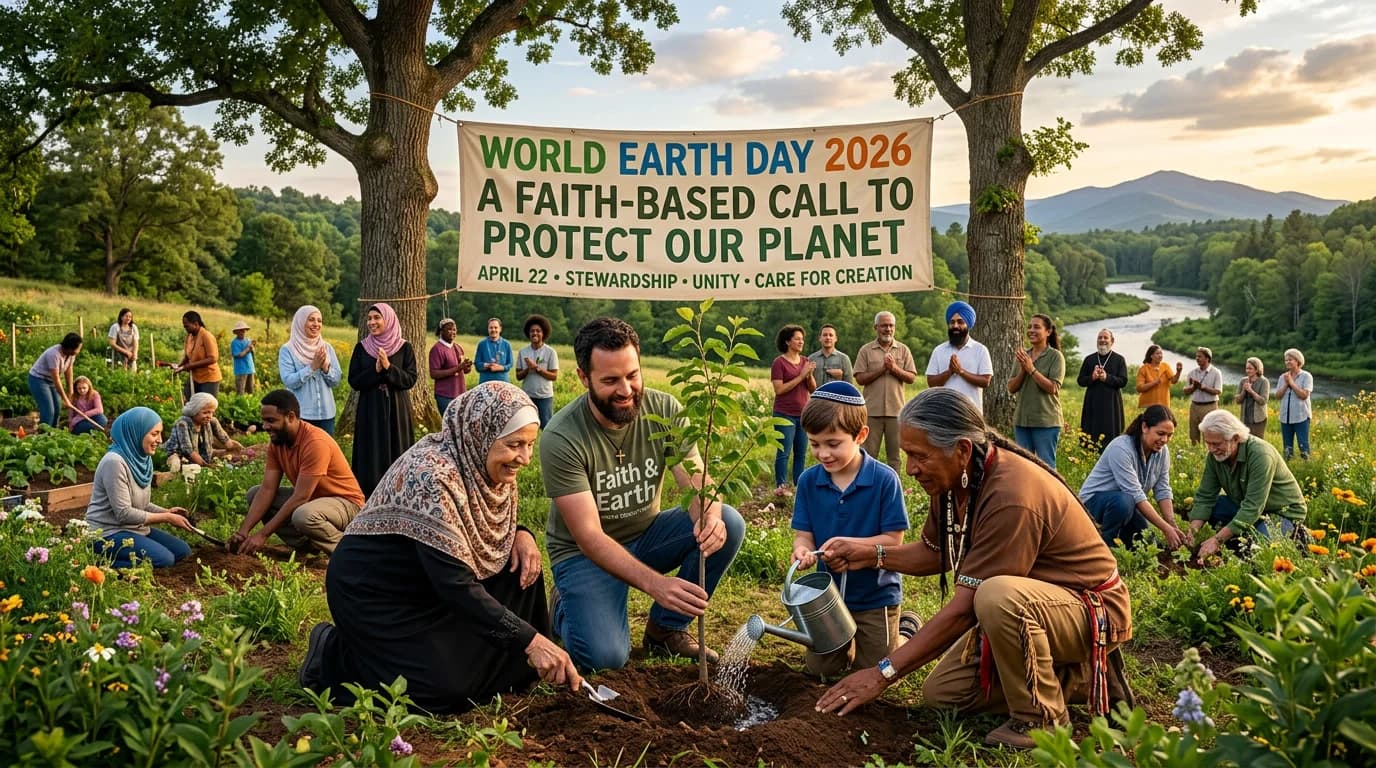
World Earth Day 2026 – Thirukkural, Quran and Our Responsibility
Today, April 22, is World Earth Day – a day when people around the globe pause to remember that this planet is our only home and that caring for it is a moral, spiritual, and practical duty.
For us, this is also a beautiful moment to connect modern environmental concerns with the timeless wisdom of Thirukkural and the Quran, and to turn that wisdom into real action.
History of the Day
Earth Day was first observed on April 22, 1970 in the United States, when an estimated 20 million people joined marches, teach‑ins, and community events to demand cleaner air, water, and land.
The idea came from Senator Gaylord Nelson, who wanted to channel the energy of student protests into a new movement focused on environmental protection.
That first Earth Day helped spark the creation of the U.S. Environmental Protection Agency (EPA) and major laws like the Clean Air Act and Clean Water Act, which dramatically reduced visible pollution in rivers and skies over the following decades.
By 1990, Earth Day had become a global event, with more than 200 million people in over 140 countries taking part; today, it is observed by over a billion people in nearly 200 countries every year.
From local air and water issues, the focus of Earth Day has expanded to global challenges such as climate change, deforestation, and plastic pollution, while also emphasizing the power of individual choices and community action.
Thirukkural About Earth
Kural 452 – Earth and Company
நிலத்தியல்பால் நீர்திரிந் தற்றாகும் மாந்தர்க்
கினத்தியல்ப தாகும் அறிவு
“The nature of earth alters water—
The nature of company alters what we know.”
Thirukkural 452 says that water takes on the nature of the soil it flows through, and in the same way, human knowledge and character take on the nature of the company we keep.
In an environmental sense, this reminds us that our surroundings are shaped by our collective choices: if we treat the soil, air, and water with respect, the world becomes cleaner and healthier; if we neglect them, they reflect our negligence back to us.
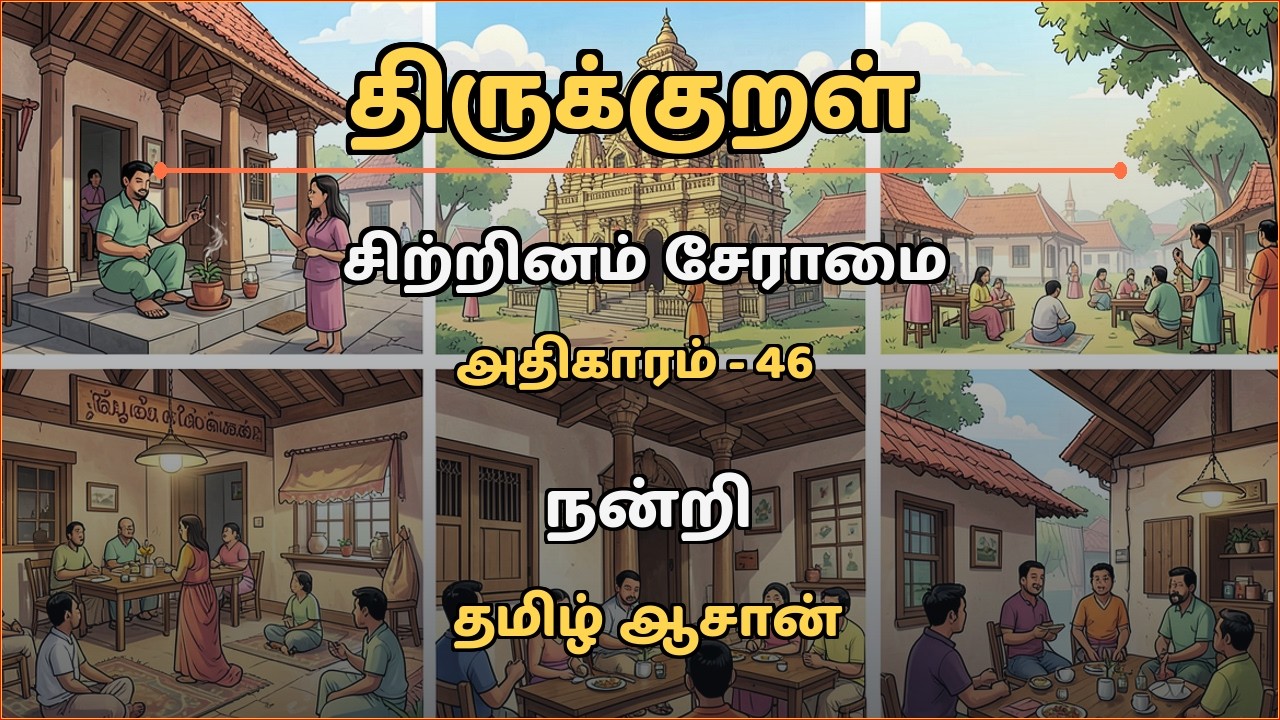
In Earth Day language: our planet today is a mirror of our habits—our consumption, our waste, our compassion, and our selfishness.
Kural 20 – Water and Rain
நீர்இன்று அமையாது உலகெனின் யார்யார்க்கும் வான்இன்று அமையாது ஒழுக்கு.
“If it is said that the duties of life cannot be discharged without water,
then without rain there can be no flow of water.”
Thirukkural 20 reminds us of a fundamental ecological truth:
no water → no life; no rain → no water.
Our entire civilization depends on rainfall to feed rivers, recharge groundwater, grow crops, and sustain all living beings.
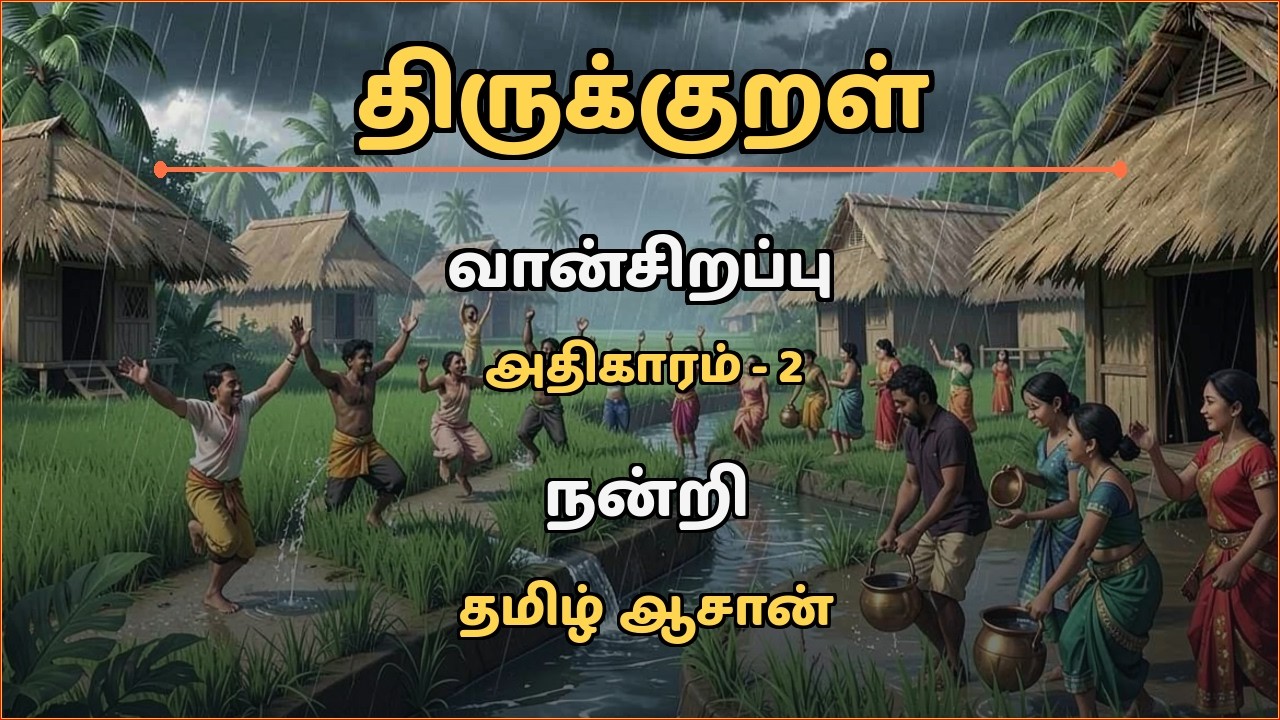
When we disturb the climate system through pollution and deforestation, we indirectly disturb rainfall and put this entire chain at risk.
In a warming world with unpredictable monsoons and frequent droughts, Kural 20 is no longer just poetry—it is a warning.
Quranic View About Environment
The Quran consistently calls humans to live as stewards (khalifah) on Earth, avoiding corruption and waste, and maintaining balance in creation.
Corruption on Land and Sea
“Corruption has appeared on land and sea because of what the hands of people have earned, so He may let them taste part of what they have done, that perhaps they will return.”
Quran 30:41
Read this verse on our site:
https://alquranjino.online/book/ara_quransimple/30/41
This ayah is often understood as describing ecological and social disorder—polluted seas, degraded lands, and broken communities—as consequences of unjust and greedy human actions.
The purpose is not simply punishment, but awakening: a reminder that if humans cause damage, they must also change course.
Destroying Crops and Animals
“When he turns away, he strives throughout the land to spread corruption therein and destroy crops and livestock; Allah does not like corruption.”
Quran 2:205
Read this verse:
https://alquranjino.online/book/ara_quransimple/2/205
This verse clearly condemns those who ruin agriculture and animals, which today can include practices like reckless deforestation, dumping industrial waste into rivers, or overusing chemicals that destroy soil life.
It shows that environmental destruction is not only a technical or economic issue, but also a moral and spiritual failure.
Moderation and Anti‑Waste
“O children of Adam, take your adornment at every masjid, and eat and drink, but do not be extravagant. Surely, He does not like the wasteful.”
Quran 7:31
Read this verse:
https://alquranjino.online/book/ara_quransimple/7/31
Here, Allah encourages enjoying permissible food and clothing, but clearly sets a boundary: no waste and no excess.
In a world of overconsumption, food waste, and disposable products, this ayah becomes a direct instruction for sustainable living.
Another verse on agriculture says:
“…Eat of their fruit when they ripen and give His due on harvest day, and do not waste. Surely, He does not love the wasteful.”
Quran 6:141
Read this verse:
https://alquranjino.online/book/ara_quransimple/6/141
Here the Quran connects production (gardens, crops), social justice (giving what is due), and sustainability (no waste) all in one place.
Together, these verses give a clear environmental ethic for Muslims: avoid corruption, protect crops and animals, consume with moderation, and never be wasteful.
Importance of Trees and Plantation
Trees are one of the most powerful tools Allah has placed on Earth for healing the climate and sustaining life.
They absorb carbon dioxide, store it in wood and soil, and release oxygen, acting as natural carbon sinks that help slow global warming.
Some key benefits of trees:
- Climate Regulation: Forests absorb around one‑third of the CO₂ emitted by human activities each year, although this ability is declining due to deforestation and climate stress.
- Clean Air: Trees filter pollutants like sulfur dioxide and nitrogen oxides and trap dust and particulate matter, reducing respiratory disease risks.
- Cooling Cities: Tree shade and evapotranspiration can cool urban streets by several degrees, reducing heat‑related illnesses and energy use for air conditioning.
- Water and Soil Protection: Forests stabilize soil, reduce erosion, slow down runoff, and help regulate river flows and groundwater recharge.
- Biodiversity: Trees provide habitat and food for birds, insects, and animals, keeping ecosystems alive and resilient.
Planting trees is important, but protecting existing trees and forests is even more critical, because old trees store more carbon and support richer ecosystems than small saplings.
On Earth Day, the goal should be: plant, protect, and actively care for trees in our streets, schools, mosques, and neighborhoods.
Is Global Warming a Threat?
Yes. Global warming is already a serious threat, not a future theory.
Scientific assessments by the Intergovernmental Panel on Climate Change (IPCC) show that human activities have already warmed the planet by about 1.1 °C above pre‑industrial levels.
This has increased the frequency and intensity of heatwaves, heavy rainfall, droughts, wildfires, and tropical storms, affecting food security, water supplies, health, and livelihoods worldwide.
If warming reaches 1.5 °C or more, the risks of irreversible damage—such as collapsing ecosystems, disappearing glaciers, and severe sea‑level rise—grow sharply.
From a faith perspective, this is deeply unjust because the poorest, who contribute the least to emissions, often suffer the most.
Real Cause of Global Warming
While natural factors influence climate, the rapid warming seen in the last 150 years is mainly driven by human‑produced greenhouse gases.
Key causes include:
- Burning Fossil Fuels: Coal, oil, and natural gas used for electricity, transport, and industry are the largest sources of CO₂ emissions, responsible for roughly three‑quarters of global greenhouse gases.
- Industrial Processes: Cement, steel, chemicals, and other industries emit CO₂, methane, and nitrous oxide, all powerful greenhouse gases.
- Deforestation: Cutting forests for agriculture or development removes major carbon sinks and releases stored carbon back into the atmosphere.
Analyses show that fossil fuels and industrial activity account for about 89% of CO₂ emissions, making them the main driver of global warming.
This aligns exactly with the Quranic idea that “corruption has appeared on land and sea because of what people’s hands have earned” and that some people “destroy crops and animals” in their pursuit of profit.
How to Protect the Earth?
Protecting the Earth can feel overwhelming, but small, consistent actions—guided by faith and wisdom—add up.
1. Practice “Do Not Waste” Every Day
- Avoid unnecessary buying; choose quality over quantity.
- Plan meals, store food properly, and use leftovers to minimize food waste.
- Prefer reusable bottles, bags, and containers instead of single‑use plastics.
This is living Quran 7:31 and 6:141 in daily life.
2. Reduce Fossil Fuel Use Where You Can
- Walk, cycle, or use public transport whenever possible.
- Carpool instead of driving alone.
- Turn off lights and devices when not in use, and choose energy‑efficient appliances.
- Support solar or other renewable energy options if they are available to you.
3. Plant and Protect Trees
- Plant native trees in your neighborhood, school, or mosque.
- “Adopt” nearby trees: water them in summer, protect their roots from damage, and report illegal cutting.
- Support organizations that conserve forests and restore degraded lands.
4. Conserve Water
- Fix leaking taps and pipes.
- Use buckets instead of running hoses where possible.
- Collect rainwater if legally allowed.
- Avoid wasting water while performing wudu, remembering that the Prophet ﷺ advised moderation even at a flowing river.
This is how we honor Thirukkural 20’s teaching that without water, nothing functions.
5. Choose Sustainable Food Habits
- Prefer seasonal, local produce to reduce transport emissions.
- Reduce highly processed foods and moderate meat consumption to cut the environmental footprint of your diet.
- Support farmers who use sustainable methods and avoid practices that destroy soil and water.
6. Educate, Share, and Advocate
- Teach children Thirukkural couplets about water and earth along with Quranic verses about creation and balance.
- Organize Earth Day talks in schools, madrasas, and mosques.
- Use social media to share practical tips, not just worries.
- Support policies that protect forests, curb pollution, and expand renewable energy.
Knowledge plus action is the real form of “tadabbur” (reflection).
FAQs
1. Why is Earth Day on April 22?
Earth Day was set on April 22 in 1970 so that university and school students could participate between spring break and year‑end exams.
The date also aligns with the traditional U.S. Arbor Day, a tree‑planting observance, making it a symbolic choice for environmental action.
2. Is global warming really caused by humans?
Yes. IPCC reports conclude with very high confidence that human greenhouse gas emissions—mainly from burning fossil fuels and deforestation—are the primary cause of the observed warming since the 19th century.
Natural variations alone cannot explain the current trend.
3. How do trees help the climate?
Trees absorb CO₂, store it in biomass and soil, release oxygen, cool urban areas, support rainfall patterns, stabilize soil, and provide habitat for countless species.
Planting and protecting trees is one of the simplest and most effective Earth‑healing actions at the local level.
4. What does the Quran say about pollution?
The Quran does not use the modern word “pollution,” but it strongly condemns corruption on land and sea (30:41), the destruction of crops and livestock (2:205), and wasteful behavior (7:31, 6:141).
These principles map directly onto modern environmental ethics.
5. How can faith help with environmental action?
Faith transforms environmental care from a trend into a moral responsibility.
Thirukkural calls for balance and respect for nature, while the Quran teaches stewardship, moderation, and justice.
When these values are lived out—at home, in business, and in community decisions—environmental action becomes consistent and long‑term.
Download Quran App – Read, Reflect, and Act
If you want to connect Earth Day awareness with daily spiritual practice, you can use the Al Quran Multilingual app to read and reflect on the verses about creation, balance, and responsibility—anytime, even offline.
📱 Android App
https://play.google.com/store/apps/details?id=jino.quran.app
📱 iOS (iPhone/iPad/Mac)
https://apps.apple.com/in/app/al-quran-multilingual/id6738510896
🖥️ Desktop App (Windows / Linux / macOS)
https://github.com/jinosh05/Al-Quran-Multilingual-Desktop/releases
🌐 Web Version
https://alquranjino.online
Inside the app or web:
- Read Quran 30:41 about corruption on land and sea:
https://alquranjino.online/book/ara_quransimple/30/41 - Read Quran 2:205 about destroying crops and livestock:
https://alquranjino.online/book/ara_quransimple/2/205 - Read Quran 6:141 about harvest, rights, and no waste:
https://alquranjino.online/book/ara_quransimple/6/141 - Read Quran 7:31 about eating, drinking, and not being extravagant:
https://alquranjino.online/book/ara_quransimple/7/31
Using these interlinked Quran pages, you can move quickly between Arabic, Tamil, and English translations, listen to recitation, and reflect on how these teachings apply to protecting the Earth today.
On this World Earth Day 2026, let’s combine:
- Thirukkural’s wisdom about earth and water
- Quranic guidance about balance and no waste
- Modern science about climate and ecosystems
—and turn them into real daily habits that honor the trust Allah has given us as caretakers of this beautiful planet.

Jinosh Nadar
Founder of Al Quran Multilingual. Dedicated to making Islamic wisdom accessible.